

Painted Outdoor Sculpture Workshop-Day 1
This week I am in Melbourne for the Getty Conservation Institute’s Treatment Strategies for Painted Outdoor Sculpture Workshop, co-organised with the National Gallery of Victoria. The five-day workshop brings together conservators working with modern and contemporary outdoor sculpture to explore the complex decisions involved in caring for painted works exposed to weather, public interaction, changing materials, and time.
I was honoured to be selected from the applicants to take part in this professional development opportunity. Places were limited to professionals (namely conservators) working with outdoor painted sculpture, with a focus on those able to share the knowledge gained with the wider conservation community. A big mihi to the selection committee for funding a space for me, without which I would not have been able to attend.
Day 1 began with introductions to the workshop themes and to the other participants, a generous and knowledgeable group from across Australasia. It was especially lovely to attend alongside Carla Pike, Exhibitions Conservator at Christchurch Art Gallery Te Puna o Waiwhetū, and to connect with colleagues facing similar questions around the care of public art, painted surfaces, and complex contemporary materials.
The workshop is designed to combine theory with practical, real-world case studies from the NGV sculpture garden and Melbourne’s public artworks. Over the week, we will be looking at coating failures, treatment planning, paint systems, localised retouching, graffiti removal, safety and sustainability, maintenance planning, and how to work well with stakeholders, artists’ estates, paint manufacturers, and applicators.
For Heritage Preservation, this kind of training is directly relevant to the growing need for thoughtful conservation of modern and outdoor artworks in Aotearoa. Painted outdoor sculpture asks us to balance many things at once: the artist’s intent, the material history of the work, public expectations, environmental exposure, maintenance realities, and the ethics of intervention.
A key reflection from Day 1 is that outdoor painted sculpture is never just a painted surface. It is an artwork, a structure, a public object, and often a loved part of a community’s visual landscape. Caring for it well means thinking beyond a single treatment and developing long-term strategies that are practical, collaborative, and respectful of the work’s ongoing life.
I’m looking forward to the rest of the week and to bringing these conversations, tools, and ideas back to our practice in Taranaki.
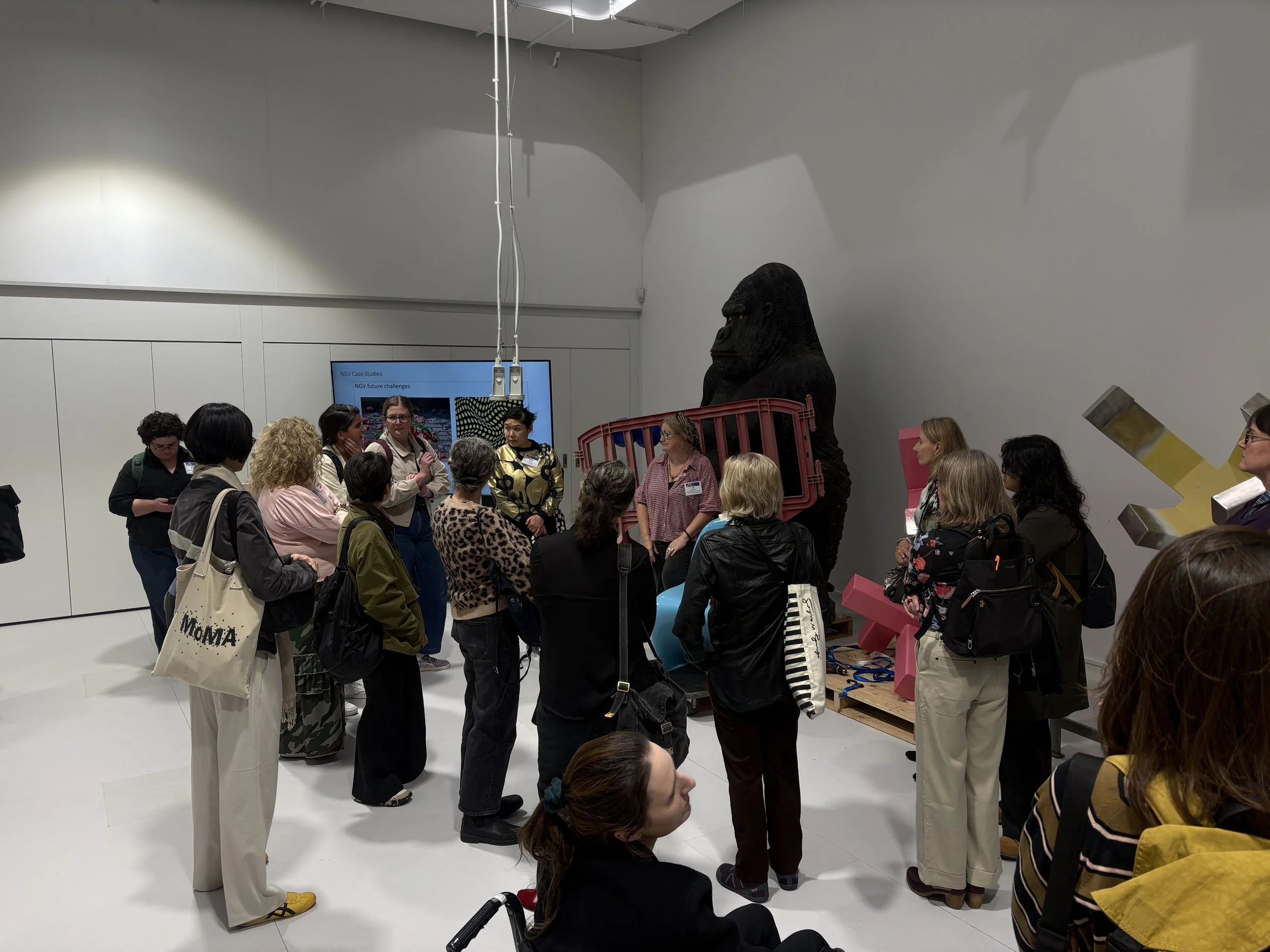
Discussion of Painted Outdoor Sculpture in the NGV collection.