

Opening a Local Time Capsule: Susanne Rawson Featured on Seven Sharp
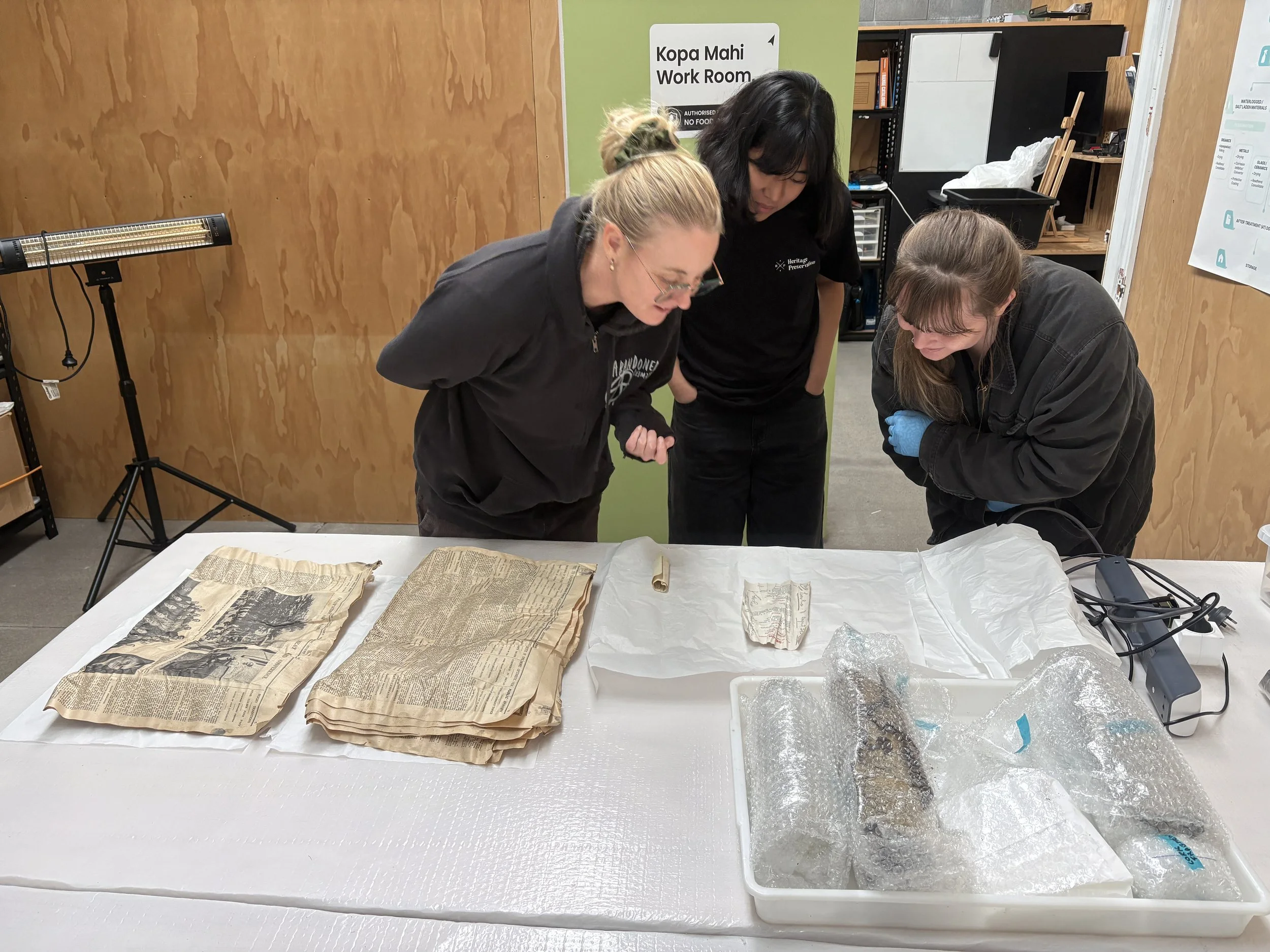
A local time capsule opening recently brought together community, memory and material history and Heritage Preservation was pleased to be part of the occasion.
Dr Susanne Rawson, Director and Principal Conservator at Heritage Preservation, joined the event to help examine the capsule and its contents. The opening was featured on TVNZ’s Seven Sharp, giving viewers a glimpse into the excitement of uncovering objects that had been sealed away for future generations.
The segment begins at approximately 5 minutes in Episode 111:
https://www.tvnz.co.nz/player/tvepisode/seven-sharp-s2026-e111-seven-sharp
More Than Opening a Container
Time capsules are often created during important anniversaries or community milestones. They may contain photographs, letters, newspapers, objects and records chosen to represent a particular moment in time.
When a capsule is opened years, or even decades, later, the contents can provide a meaningful connection with the people who assembled it. However, opening the container is only the beginning of the process.
Materials that have been sealed away for a long period may have been affected by:
moisture or condensation
mould growth
metal corrosion
weakened paper and photographs
deteriorating plastics, adhesives or textiles
sudden changes in temperature and humidity
Even objects that appear stable may become more vulnerable once they are removed from the environment inside the capsule.
Why Preparation Matters
The excitement surrounding a time capsule opening can make it tempting to unpack everything immediately. A little preparation, however, can reduce the risk of accidental damage.
Before opening a capsule, it is useful to consider:
where the opening will take place
how each item will be photographed and documented
what handling materials and temporary supports are available
how damp, mouldy or fragile objects will be managed
where the contents will be stored after the event
who should be involved in decisions about their future care
Careful documentation is particularly important. Recording the original arrangement of the contents, the condition of each item and the story of the opening helps preserve information that might otherwise be lost.
Conservation and Community
Time capsules are not only collections of objects. They hold the stories, intentions and memories of the people who created them.
At Heritage Preservation, we believe communities should be active participants in the care of their heritage. Our role is to provide practical conservation knowledge while listening to the people and organisations connected with the material.
This approach helps ensure that decisions about documentation, treatment, storage and future display reflect both the physical needs of the objects and their significance to the community.
Planning to Open a Time Capsule?
Heritage Preservation can assist schools, councils, museums, historical societies, churches and community organisations with:
planning before a time capsule opening
on-site conservation support
safe handling and unpacking
photography and condition documentation
assessment of damaged or unstable materials
conservation treatment
storage and packaging recommendations
advice for creating a new time capsule
Early planning is especially valuable when the capsule has been buried, exposed to moisture or stored in uncertain conditions.
Talk With Our Team
Is your organisation planning to open, assess or create a time capsule?
Contact Heritage Preservation before the opening date to discuss how we can help protect the objects and stories inside.
Watch the Seven Sharp feature:
https://www.tvnz.co.nz/player/tvepisode/seven-sharp-s2026-e111-seven-sharp
Susanne’s segment begins at approximately 5 minutes.