Conserving the Living Thread: People, Knowledge and the Future of Conservation in Aotearoa, Day Two of the NZCCM Conference
If you missed my review of Day One, read Looking Back to Move Forward: Day One at the NZCCM 40th Anniversary Conference.
Have a look at the speaker’s programme here: NZCCM Speakers Programme 2026
If Day One asked us to look at how conservation developed as a profession in Aotearoa, Day Two brought the conversation firmly into questions of whakapapa, identity, training, community, access and the people who will carry conservation forward.
The formal programme opened with Dean Whiting’s keynote, Te Aho Ora: Conserving the Living Thread, followed by a session dedicated to Te Ao Māori and conservation practice in Aotearoa.
What followed felt less like a discussion about preserving things and more like a discussion about sustaining relationships between people and taonga, generations, knowledge systems, communities and the profession itself.
Te Aho Ora: the living thread
Some people keep showing up when it matters. Dean is one of them, as described by Vicki-Anne Heikell.
That idea stayed with us after the second day of the New Zealand Conservators of Cultural Materials Pū Manaaki Kahurangi (NZCCM) 40th Anniversary Conference, Titiro Whakamuri: Retrospection & Change.
Through photographs, taonga and memories, he gave us small windows into a life in which making, whānau, identity and cultural heritage were intertwined from childhood.
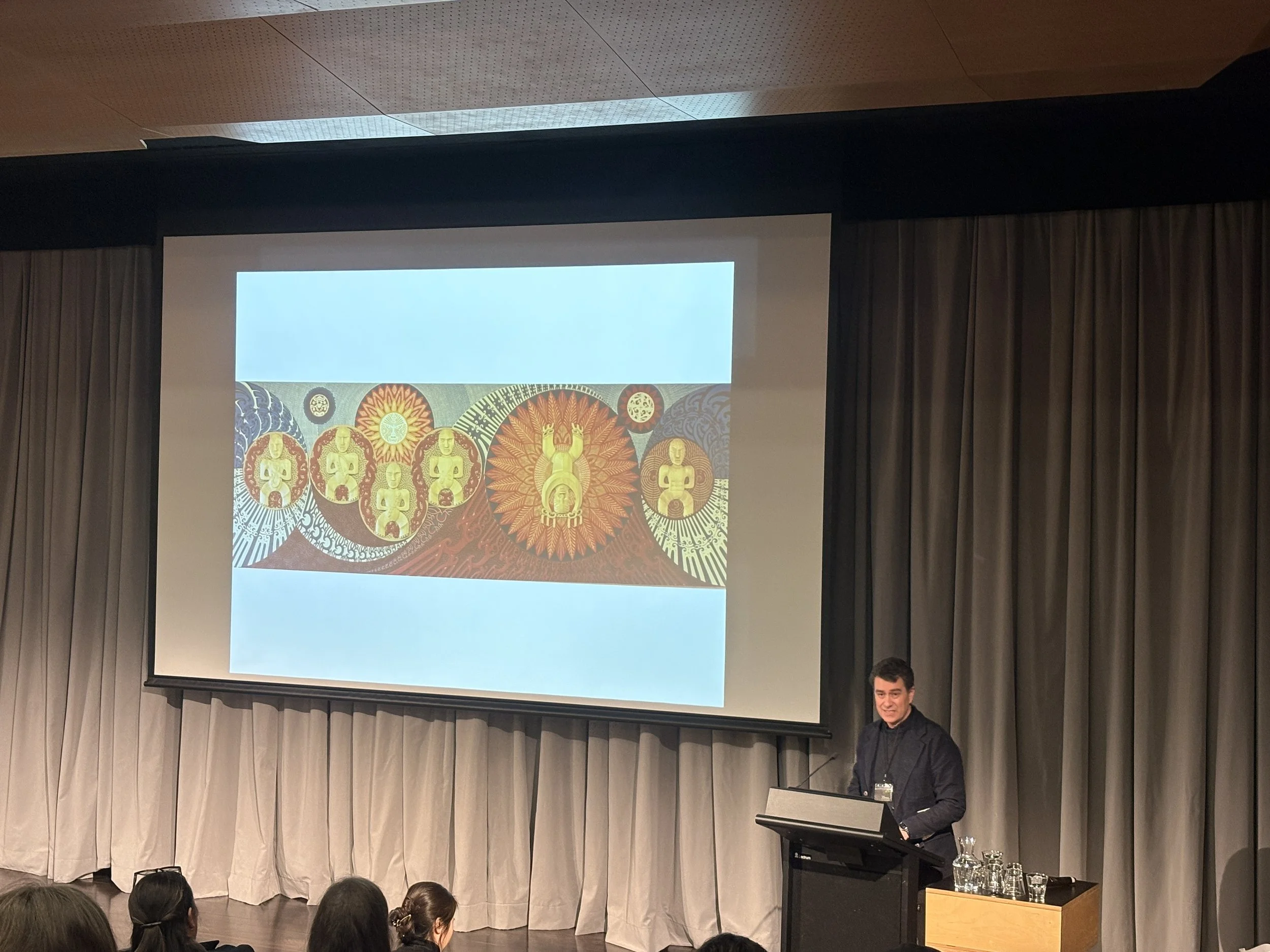
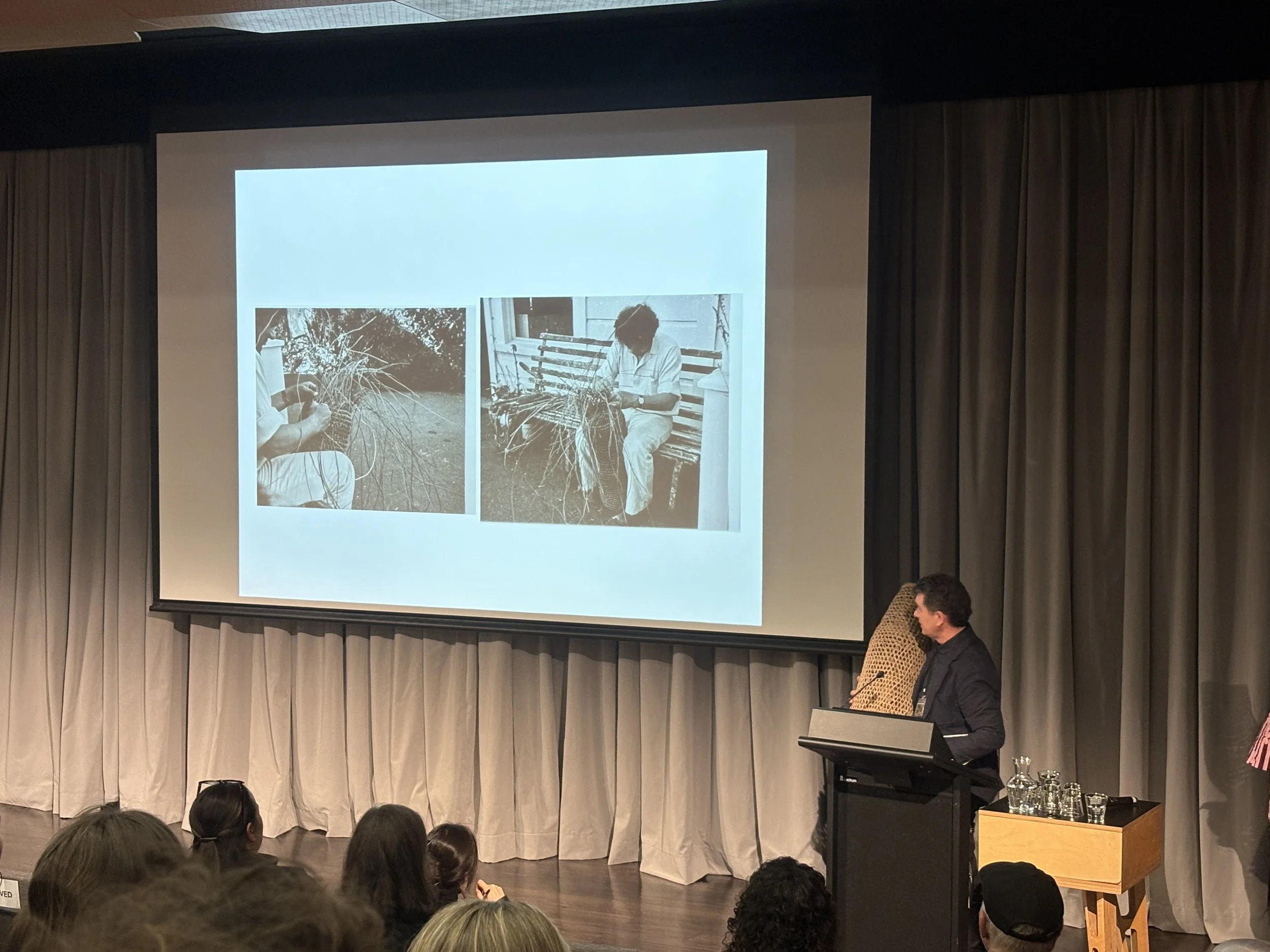
His father, Cliff Whiting, created Te Wehenga O Rangi Rāua Ko Papa at the National Library of New Zealand Te Puna Mātauranga o Aotearoa, and Dean remembered hiding behind its panels as a child. He showed a panel he himself had made at around six years old and spoke about his father's growing interest in building hīnaki.
These weren't simply childhood anecdotes. Together they showed how knowledge can develop through being present, watching, making and participating.
Dean's story then expanded into a much larger history of Māori art and cultural revitalisation.
He discussed efforts to rebuild marae during the 1920s and 1930s, when the legacies of carving and other customary practices had been diminished. Rebuilding pou and wharenui was not simply about recreating physical structures. It was connected with bringing people back to marae, strengthening communities and creating opportunities on the land.
It was, as Dean described it, an act of “expressing identity under the oppression of government.”
He traced the influence of people who worked across communities and institutions to advance Māori aspirations, including developments around the Rotorua School of Māori Arts and Crafts. He also spoke about Pine Taiapa, who documented marae with a camera Dean showed the attendees, creating another way for knowledge and practice to circulate.
Again, the important movement was not one-way. Knowledge developed within institutions could filter back into communities, while community knowledge reshaped institutional practice.
Remembering the people who made space
There was also a particularly moving homage to conservator Jack Fry.
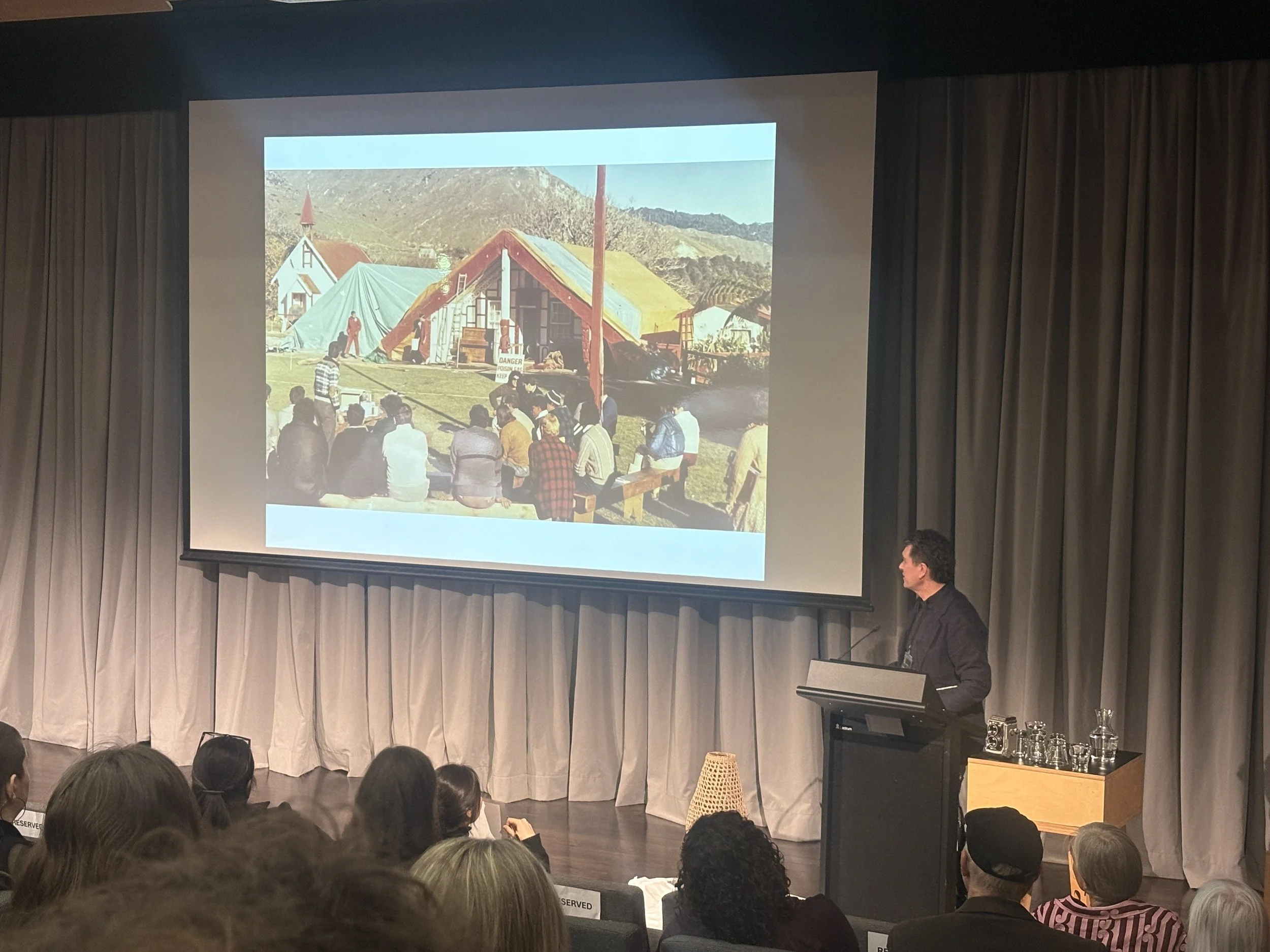
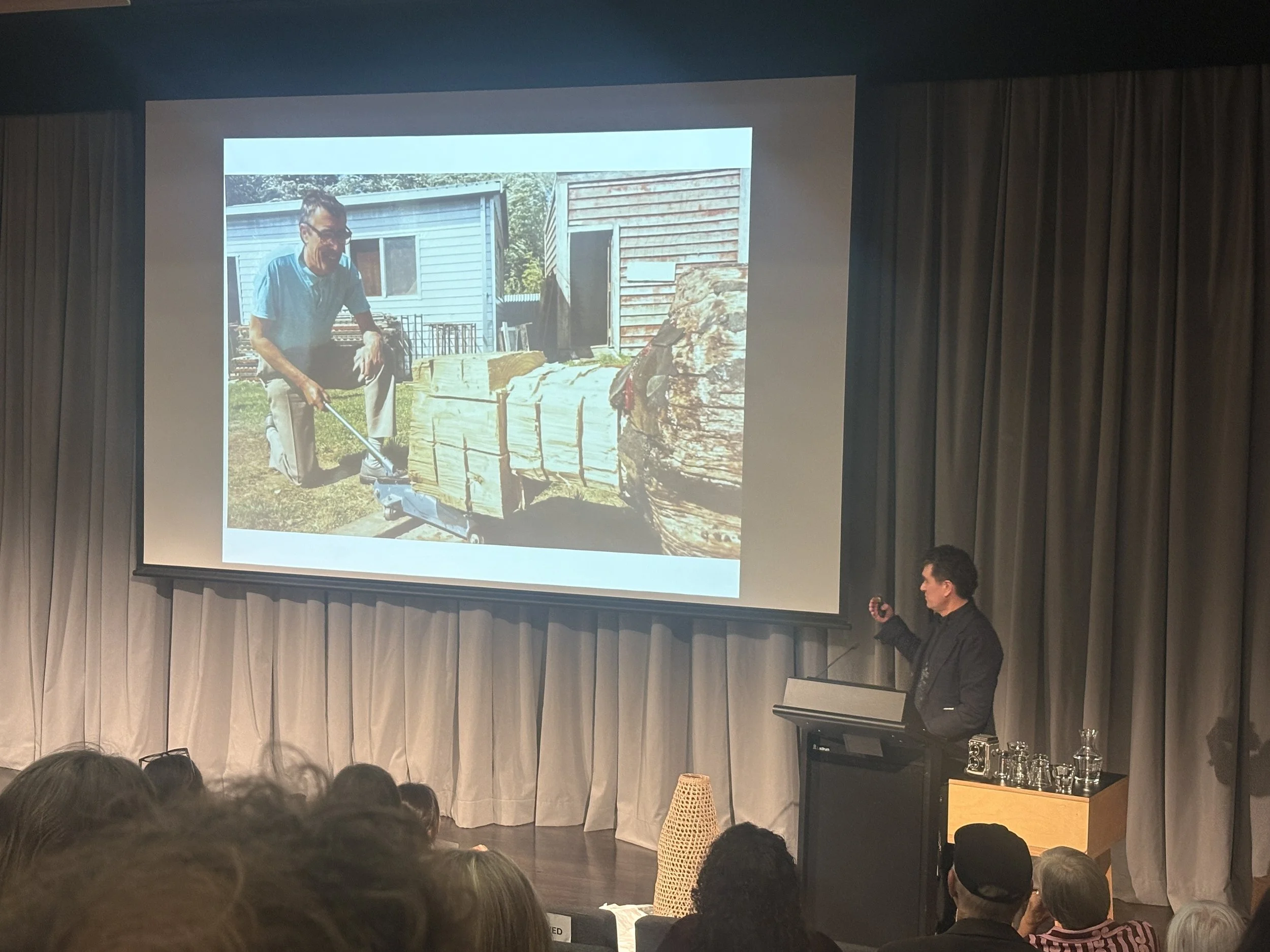
Dean recalled Jack as the first person to greet him in conservation, not simply as a technical specialist, but as a genuine person who understood the relationships between communities and taonga.
Jack was respected because he fitted into the community rather than positioning himself outside it.
It connected beautifully with the histories we had heard on Day One.
Conservation in Aotearoa has certainly been shaped by treatments, technologies, standards and institutions. But its development has also depended on individuals willing to build relationships, mentor others and make space for different ways of understanding heritage.
Some people keep showing up when it matters.
Their influence can extend far beyond any individual treatment.
When science and mātauranga meet
A programme change brought Monica Tromp and Amber Aranui into the morning session, presenting work connected with their poster, He Ika Moana, He Ika Whenua: Minimally Invasive Species Identification for Unprovenanced Bone Taonga.
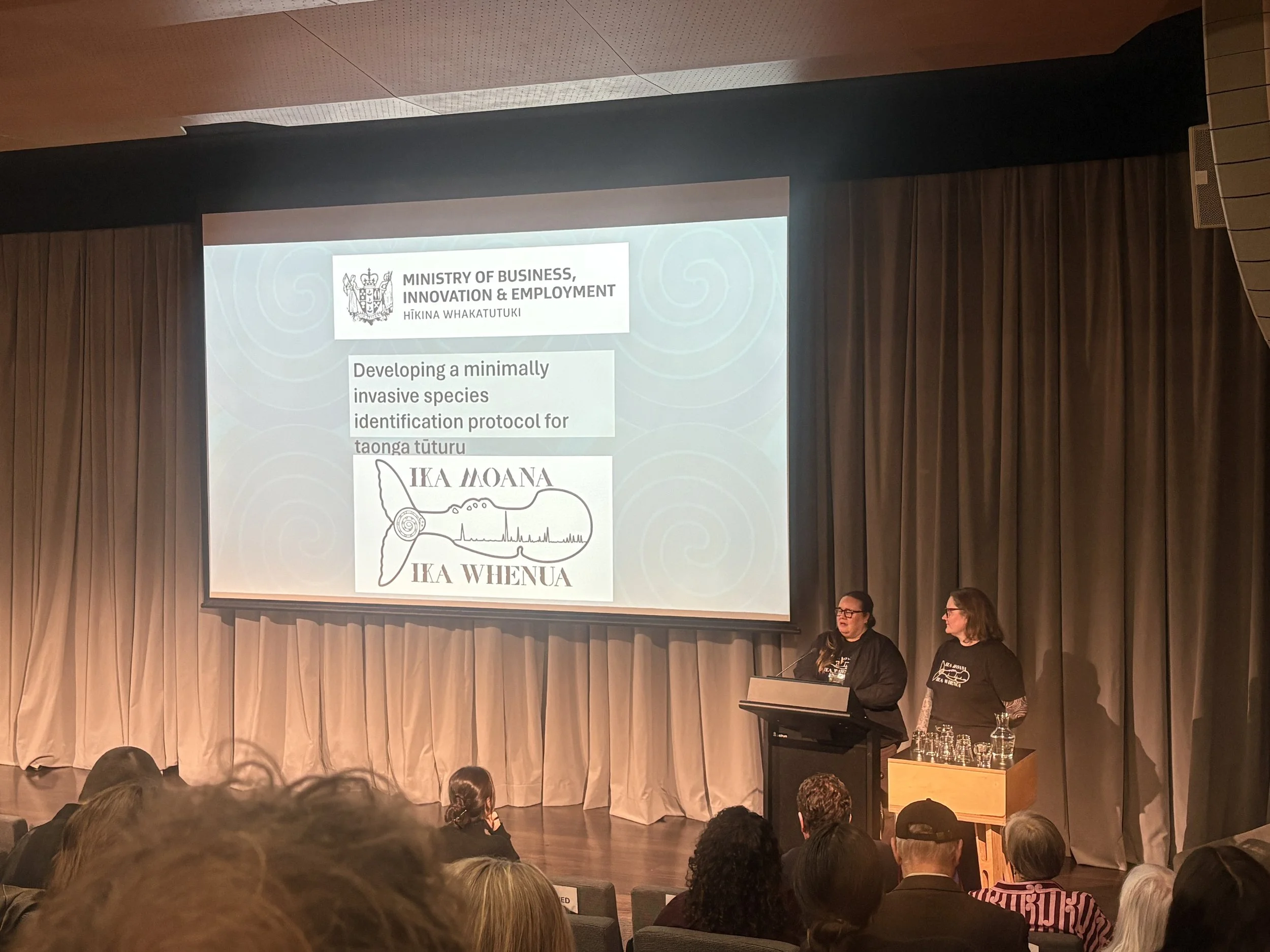
Their MBIE-supported research begins from a powerful principle: mātauranga Māori and Western scientific approaches should not sit in a hierarchy, but contribute alongside one another.
The kupu themselves tell a story. Whales are ika moana in the ocean and become ika whenua when they come onto land.
Amber spoke about reconnecting taonga with communities. The team began with unprovenanced taonga and developed a minimally invasive sampling method using polishing film of the type used for fibre-optic cables. Analysis that had previously required access to Harvard can now be undertaken in Aotearoa using biomedical research instrumentation at the University of Auckland.
The research is already challenging assumptions.
Modified bone can be extremely difficult to identify visually. In testing discussed during the presentation, even specialist visual identification was not consistently correct. Their analysis has identified sperm whale most frequently among the material studied, followed by humpback whale, while dolphin material presents further complexities.
More significantly, they have encountered kōiwi tangata among collections they have examined—including material incorporated into objects where its identity was not apparent.
That transforms a seemingly technical question, “what species is this bone?” into something with profound cultural and ethical implications.
Scientific identification is therefore not the end point. It can become a pathway towards reconnection, better-informed care and appropriate conversations with communities.
Growing future kaitiaki
Vasiti Palavi's Āta Tiaki Taonga Tuku Iho: Growing Future Kaitiaki Through Taonga-Centred Learning moved naturally from identifying taonga towards another responsibility:
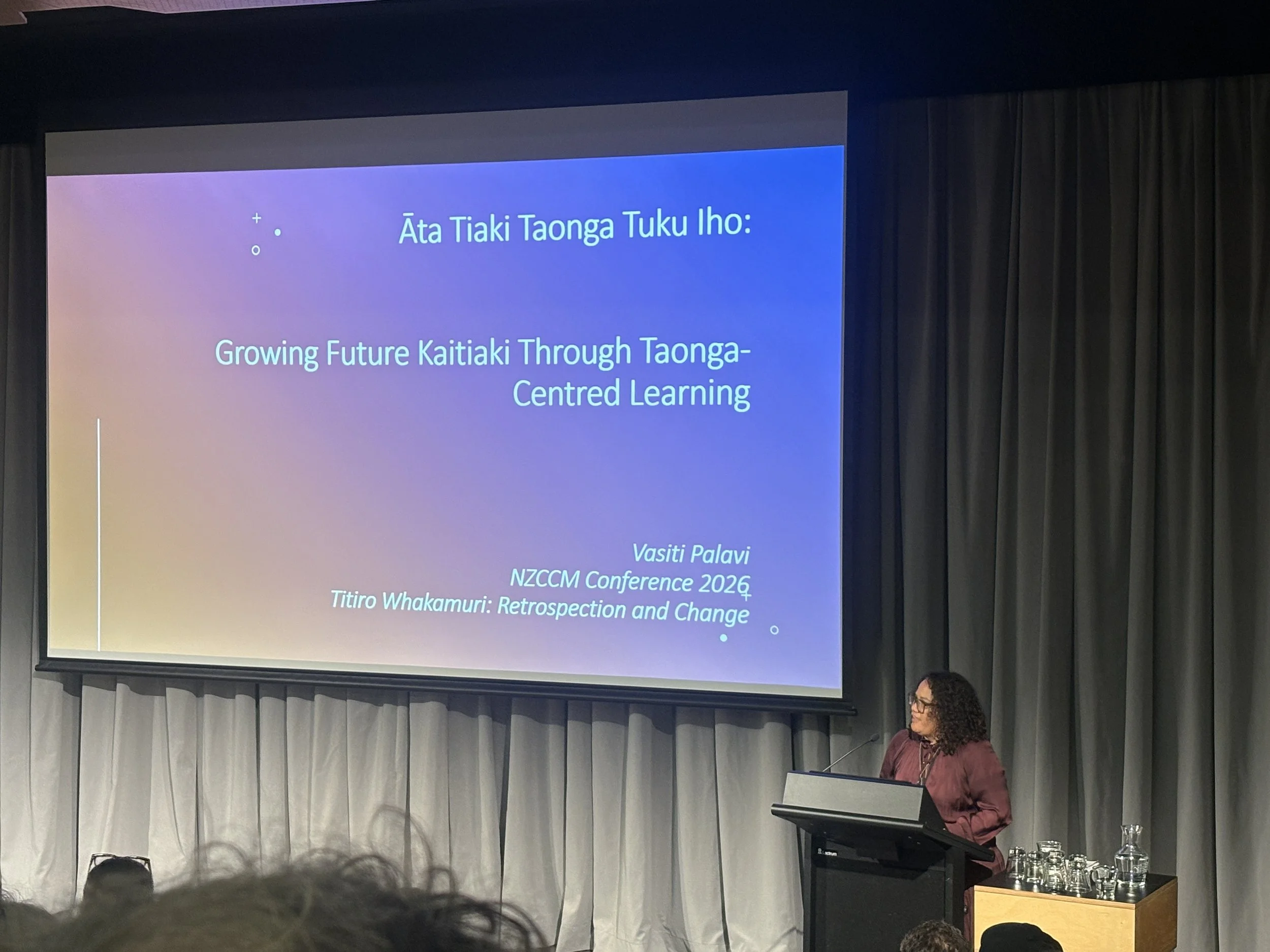
Who will care for them next?
Vasiti reflected on the responsibility to nurture people forward and acknowledged the groundwork of people such as Mina McKenzie in supporting Māori participation in conservation.
The challenges remain substantial.
Young Māori entering the profession may bring strong grounding in te reo and hapū affairs, but enthusiasm alone does not create a sustainable career. Training needs to be accompanied by support, employment and genuine pathways into the profession.
The programme Vasiti described takes an earn as you learn approach, with a cohort of six undertaking 18 months of paid learning, subject to funding and delivery arrangements.
Importantly, learning happens through making.
Technical conservation knowledge has its place, but it exists alongside iwi relationships, cultural knowledge and practical experience.
That distinction matters. If conservation wants greater diversity in the profession, it cannot simply invite different people into pathways designed without them. We also need to examine the pathways themselves.
“I'm already a conservator”
That idea continued in the presentation on the student conservators network by Wawe Mansfield, Ameliah-Rose Tioriori and Kataraina Poi. Wawe and Ameliah-Rose beamed in from Melbourne for questions.
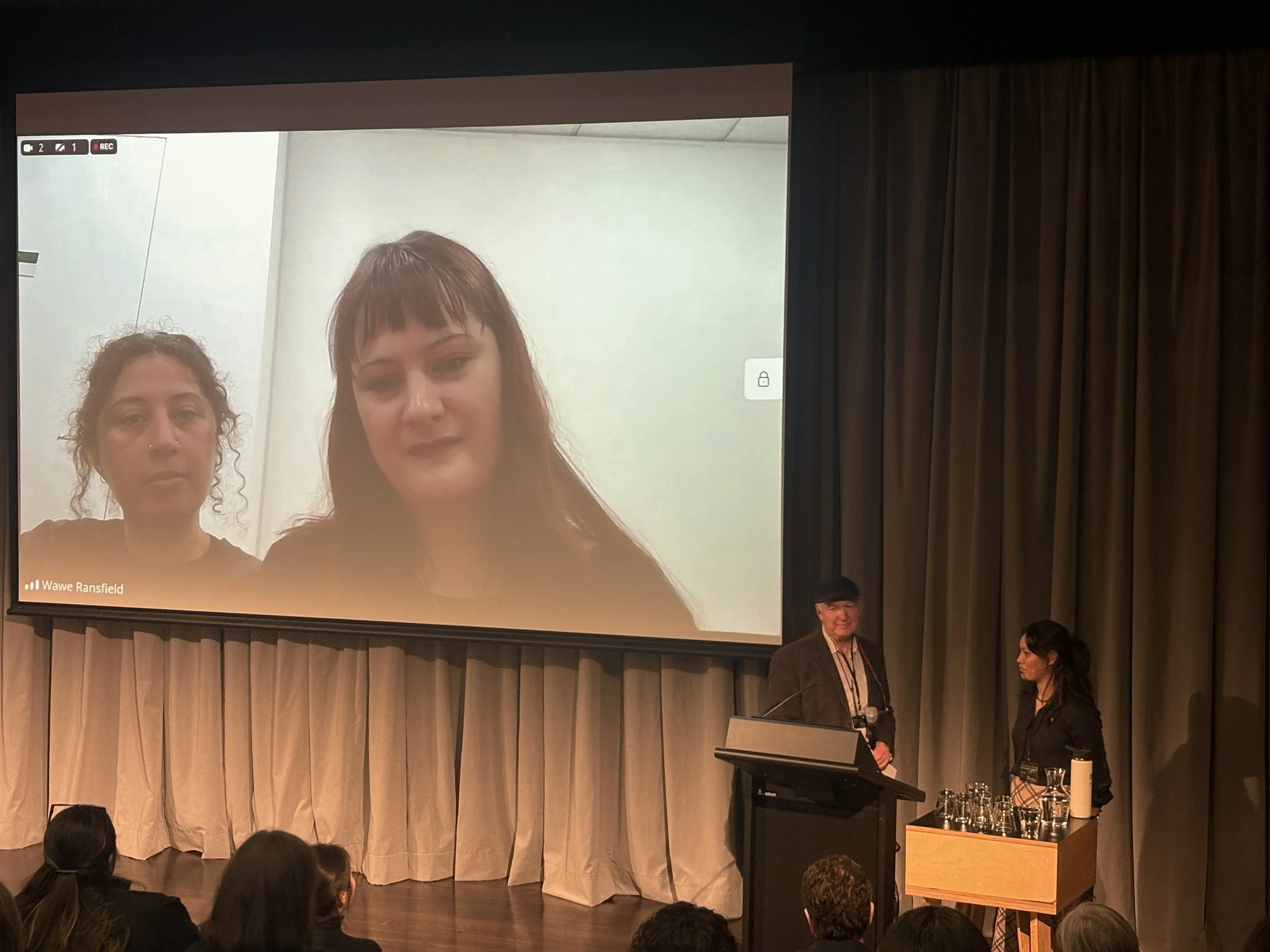
Kataraina’s story included guidance in mātauranga Māori and waiata, encounters and relationships formed along the way, and eventually a realisation:
“I'm already a conservator.”
The network has developed into Te Arai, creating community, connection and support around what can otherwise be a “lonely and opaque path”.
Its foundations are informed by Te Tiriti and Wai 262, while its concerns are intensely practical.
The cost of training is a barrier. Funding is limited. Pathways into conservation can be unclear. Internships and placements are scarce. Access to higher education itself can exclude potential conservators before their careers have even begun.
The challenge to established professionals was therefore simple but important:
Support people.
Mentor them.
Help make the pathway visible.
What counts as conservation training?
Sophie White's Hei kohia mai, new nets go fishing widened the training conversation further by examining pathways for Indigenous materials and natural history collections.
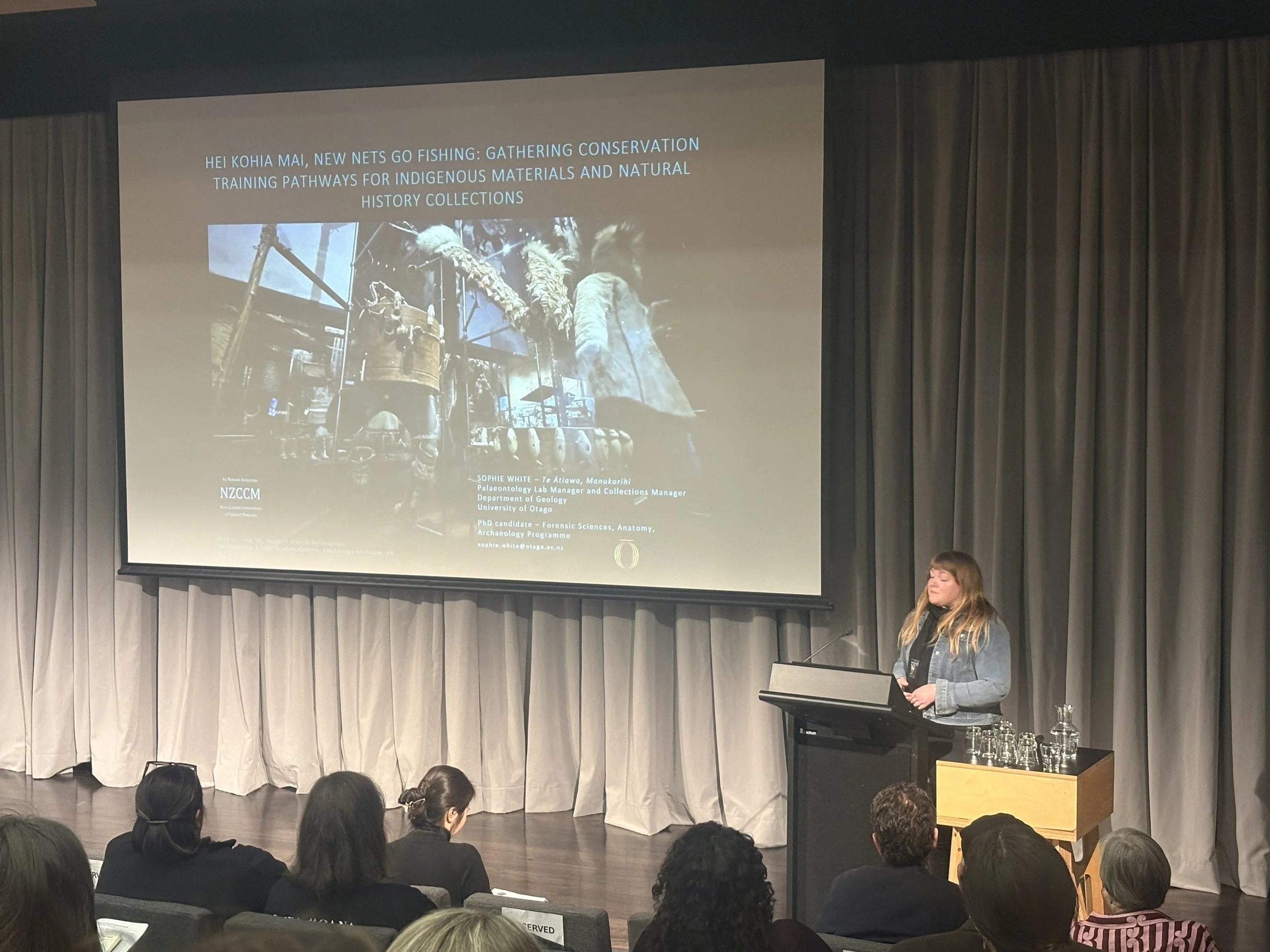
Sophie generously acknowledged the many people who had answered questions and mentored her throughout her own journey, a reminder that professional education happens through networks as much as classrooms.
Her experience also highlighted how difficult specialist training can be to access from Aotearoa.
Natural history conservation sits in a fascinating space where distinctions between art, science, nature and culture begin to dissolve. Yet dedicated training opportunities are extremely limited.
Sophie visited museums, universities and other facilities around the world to understand how different organisations work, comparing programmes and the considerable costs associated with pursuing specialist education overseas.
That raised an uncomfortable question:
Even if we train more conservators, where are the jobs for them?
There is little value in encouraging people into a profession without also thinking about the structures that will allow them to remain in it.
Doing the groundwork before the objects arrive
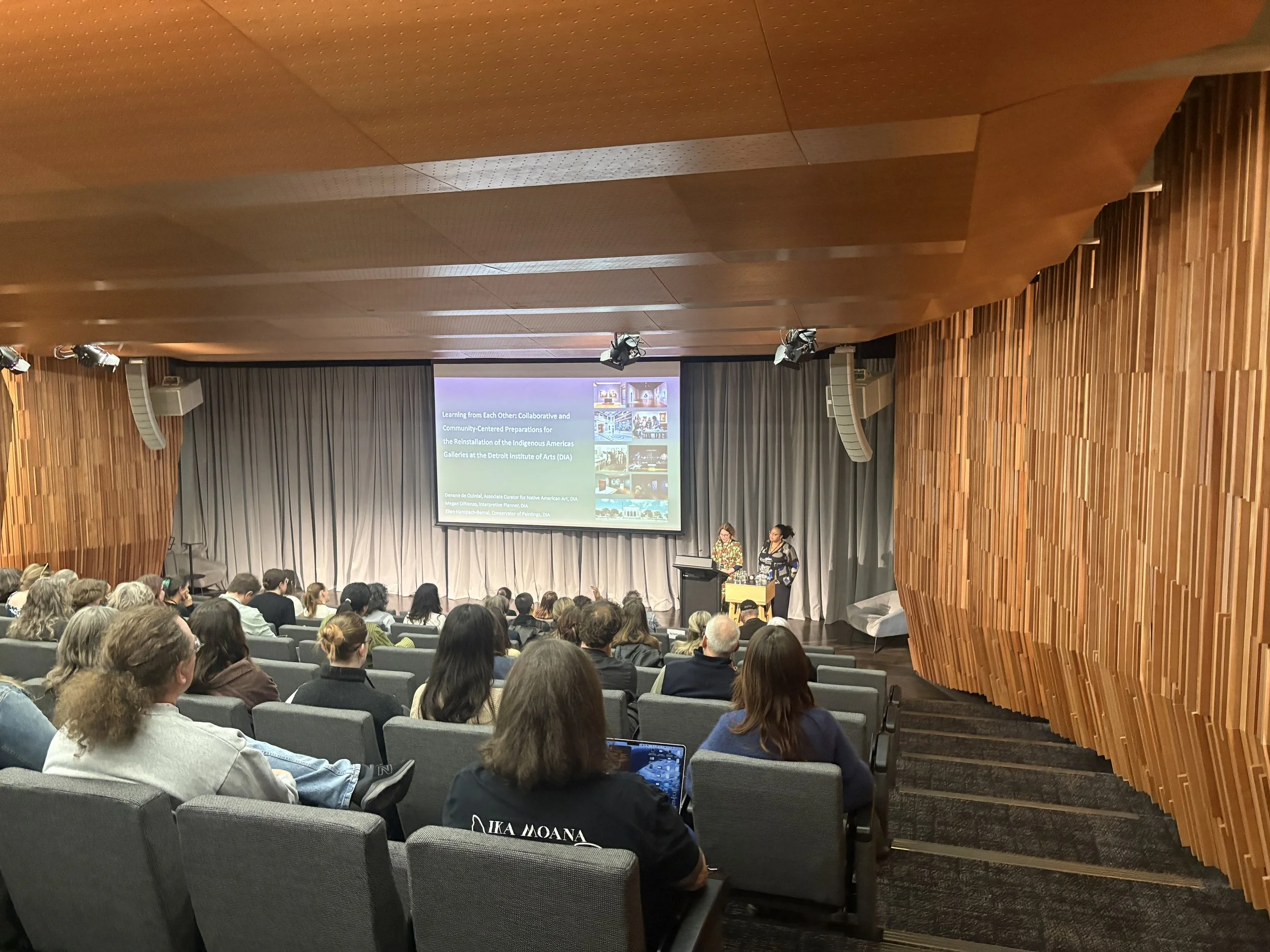
Ellen Hanspach-Bernal and Denene de Quintal brought an international perspective through their work at the Detroit Institute of Arts, discussing preparations for the reinstallation of its Indigenous Americas galleries.
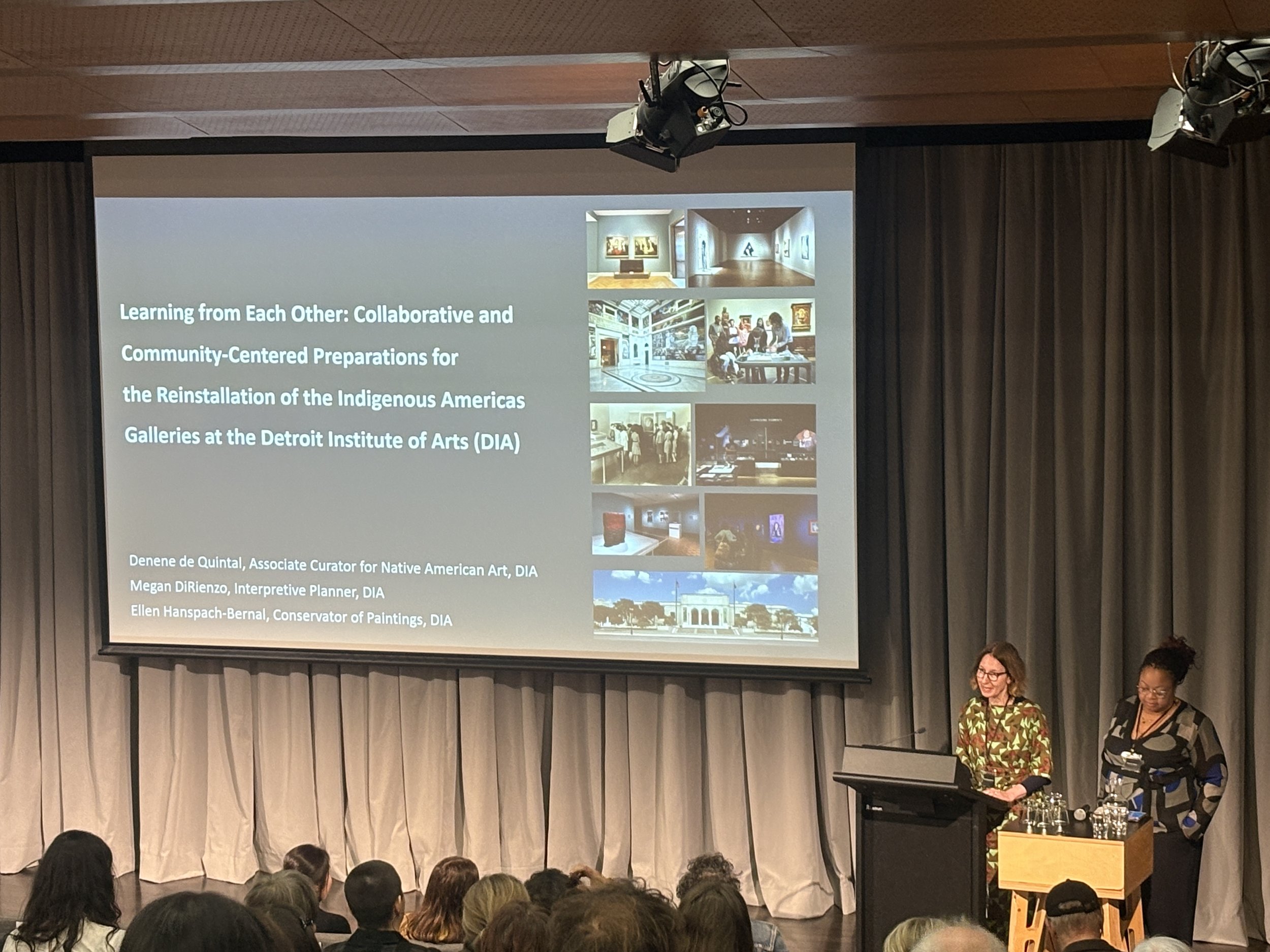
The museum holds thousands of Native American objects alongside significant South American collections. After a lengthy period without Native American art on display, the team is considering not simply how objects should return to galleries, but how visitors and communities might experience those spaces differently.
Interactive elements, games, artworks and interviews are among the approaches being explored, with an aspiration that visitors feel the galleries belong to them too.
But one of the strongest messages was about everything that happens before installation.
The team has been travelling, visiting other institutions, building relationships and learning from others. They were candid about the complexities and caveats involved.
They are trying.
They are listening.
And they are doing the groundwork.
For conservators accustomed to measuring progress through completed treatments, it is worth remembering that relationship-building is work too.
The conservation you don't see
Georgia Miller's journey into preventive conservation offered another perspective on what we recognise as professional expertise.
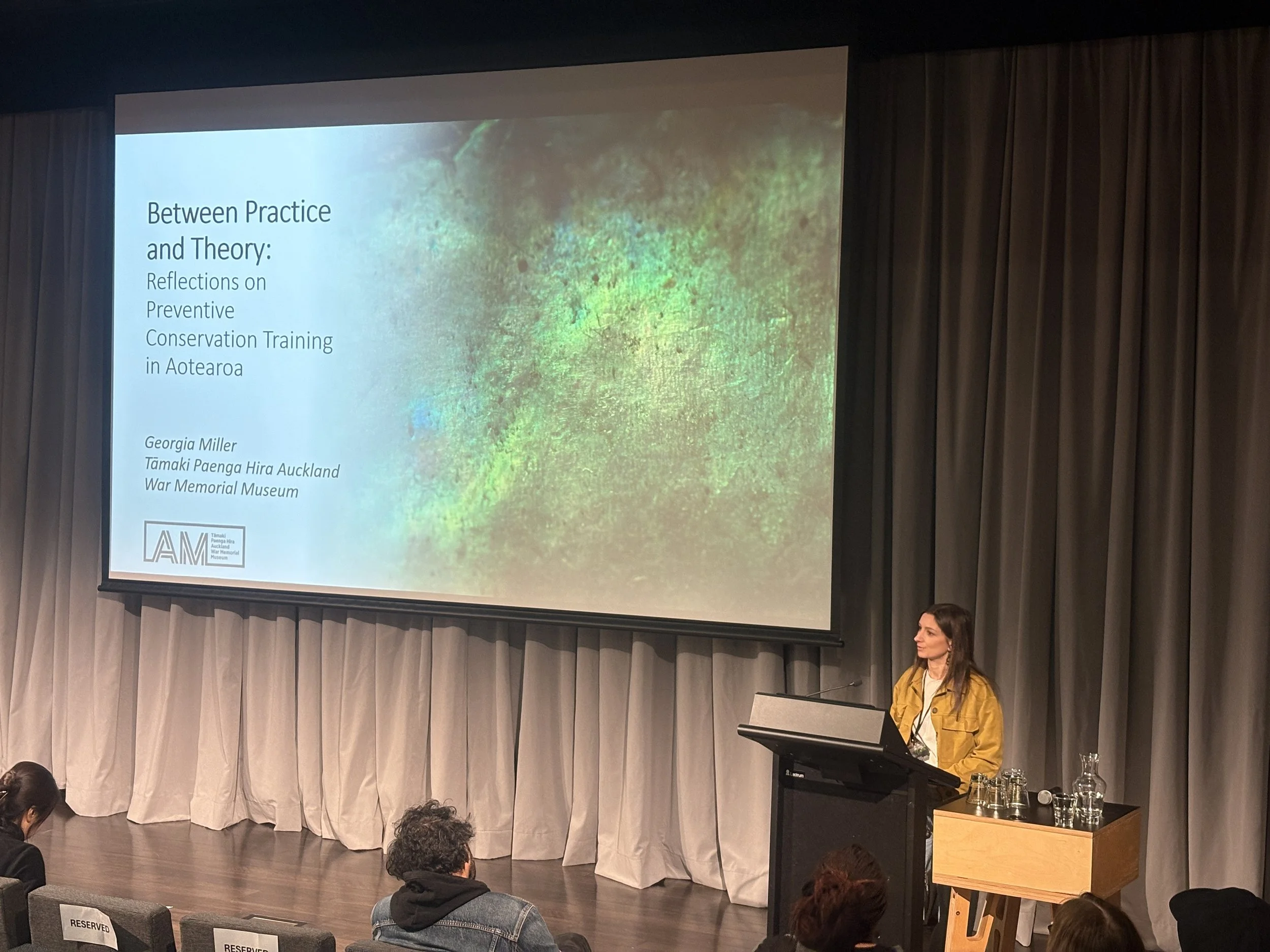
Georgia originally trained as a teacher, worked in museum education, completed museum studies and moved into collections care through what began as a temporary opportunity.
Her presentation highlighted the considerable difference between learning conservation theory and applying it within an institution.
Preventive conservation also has a visibility problem.
A repaired object provides a compelling before-and-after photograph. A mould outbreak that never happened does not.
Neither does the insect infestation prevented through monitoring, the environmental problem identified early, or the years of deterioration avoided through good storage.
The expertise behind preventive conservation can therefore be difficult to see.
For Georgia, online training provided a pathway that did not require going overseas. Her experience also raised an important question about how the profession recognises learning: formal qualifications should not be the only evidence that meaningful education and professional development have taken place.
That idea connected directly with the day's wider discussion.
There are many ways to learn.
Our professional structures need to become better at recognising them.
AI, conservation and the things people do best
Damen Joe then took us into one of conservation's newest areas of experimentation: artificial intelligence.
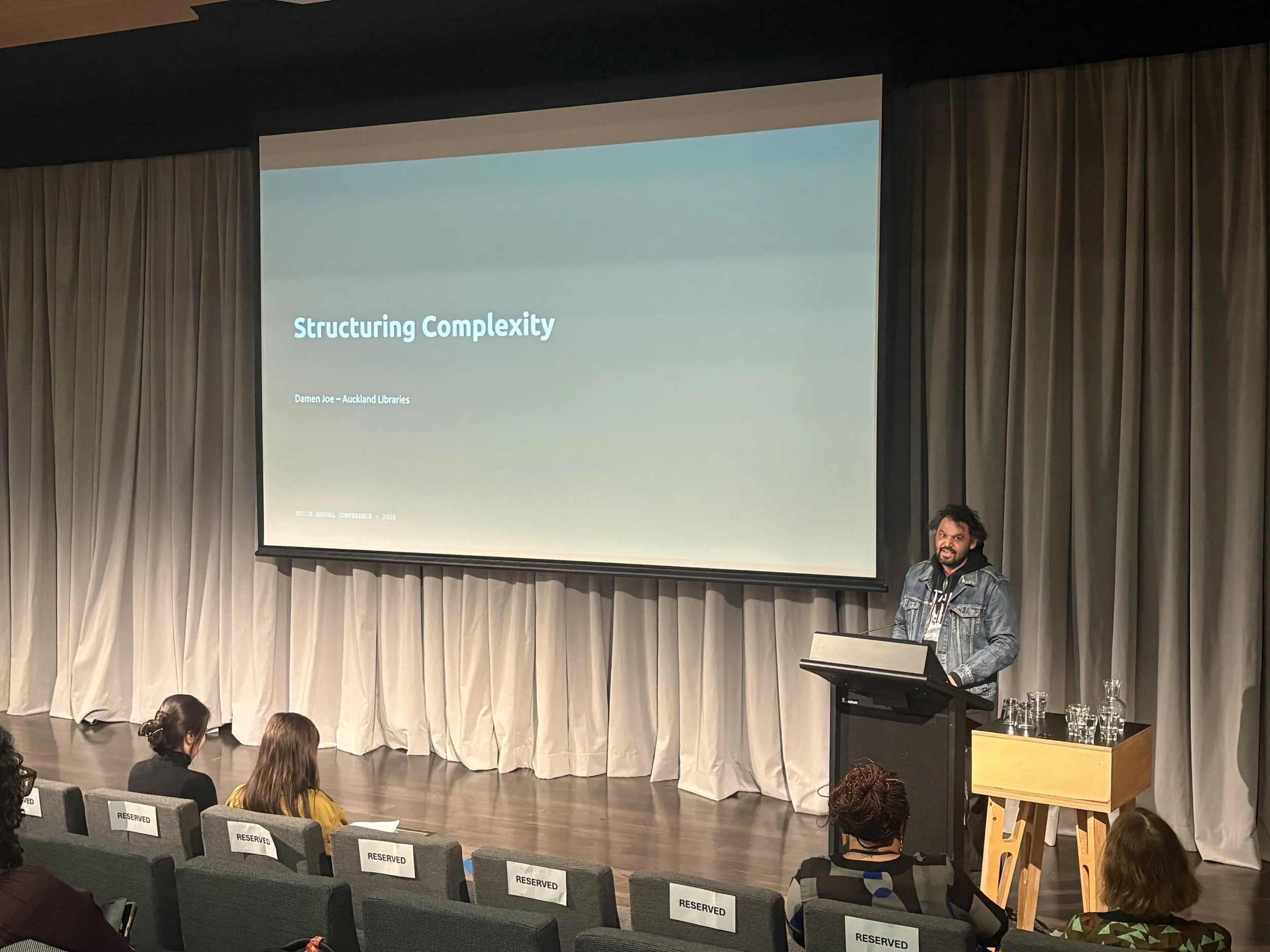
AI produces strong and often contradictory reactions, but conservation has always adopted new technologies when they can help us understand or care for collections.
Damen's approach has been deliberately narrow and practical.
Rather than asking what AI might hypothetically do to conservation, he has been experimenting with whether it can help solve specific problems.
He demonstrated a game designed to help staff learn disaster readiness. He has explored ways of making air-quality data more understandable and developed tools for assessing light exposure for particularly sensitive collection material, informed by microfading work at Auckland Museum.
Rainfall offered another real-world problem.
After experiencing repeated leaks, he began looking at Auckland Council rainfall data and considering whether information could be modelled specifically around areas where heritage collections were stored.
From there came the idea of a disaster-readiness tool: something trained staff could quickly reference, bringing together rainfall information and risk levels to provide useful warnings.
These are not attempts to replace professional expertise.
They are attempts to make information more usable.
His closing message was perhaps the most important:
When we are doing our best work, people can achieve extraordinary things. AI is another tool that may help us reach higher.
The tool is about us.
It does not replace the relationships, judgement, creativity and responsibility at the centre of conservation.
Damen also made the experimental tools from his presentation available online through his NZCCM 2026 project site.
Art, science, nature and culture flow together
By the end of Day Two, the boundaries around conservation felt considerably less rigid than they had at the beginning of the conference.
Science and mātauranga Māori.
Making and academic learning.
Objects and people.
Natural history and cultural heritage.
Technology and human judgement.
Professional expertise and community authority.
These are not necessarily opposing positions that conservation needs to choose between.
As Sophie put it through her own interdisciplinary journey, art, science, nature and culture can flow together.
Perhaps our professional structures need to become equally fluid.
Looking backwards to move forward
Across forty years, conservation in Aotearoa has changed enormously.
But one of the most striking lessons from Titiro Whakamuri was that change rarely begins with a standard or a piece of equipment.
It begins with people.
People such as those remembered across these two days who challenged established practice, created training opportunities, shared knowledge and opened doors for those coming after them.
People who recognised that caring for taonga requires relationships with the communities to whom those taonga belong.
People prepared to ask whether our existing professional pathways are accessible—or whether entirely different pathways need to be built.
And people willing to experiment with new technologies while remaining clear about what technology cannot replace.
At Heritage Preservation, this resonates deeply with our own philosophy of thinking together. We believe conservation is strengthened when communities move from being outside the conservation process to participating in the decisions that affect their heritage.
The challenge for the next forty years is therefore larger than preserving the objects already in our care.
We also need to preserve knowledge, strengthen relationships and create opportunities for the people who will care for these materials after us.
Because the living thread of conservation isn't held by one person.
It continues because people keep showing up when it matters.