Looking Back to Move Forward: Day One at the NZCCM 40th Anniversary Conference
How does a profession change over forty years?
That question sat at the heart of the first day of the New Zealand Conservators of Cultural Materials Pū Manaaki Kahurangi (NZCCM) 40th Anniversary Conference, Titiro Whakamuri: Retrospection & Change.
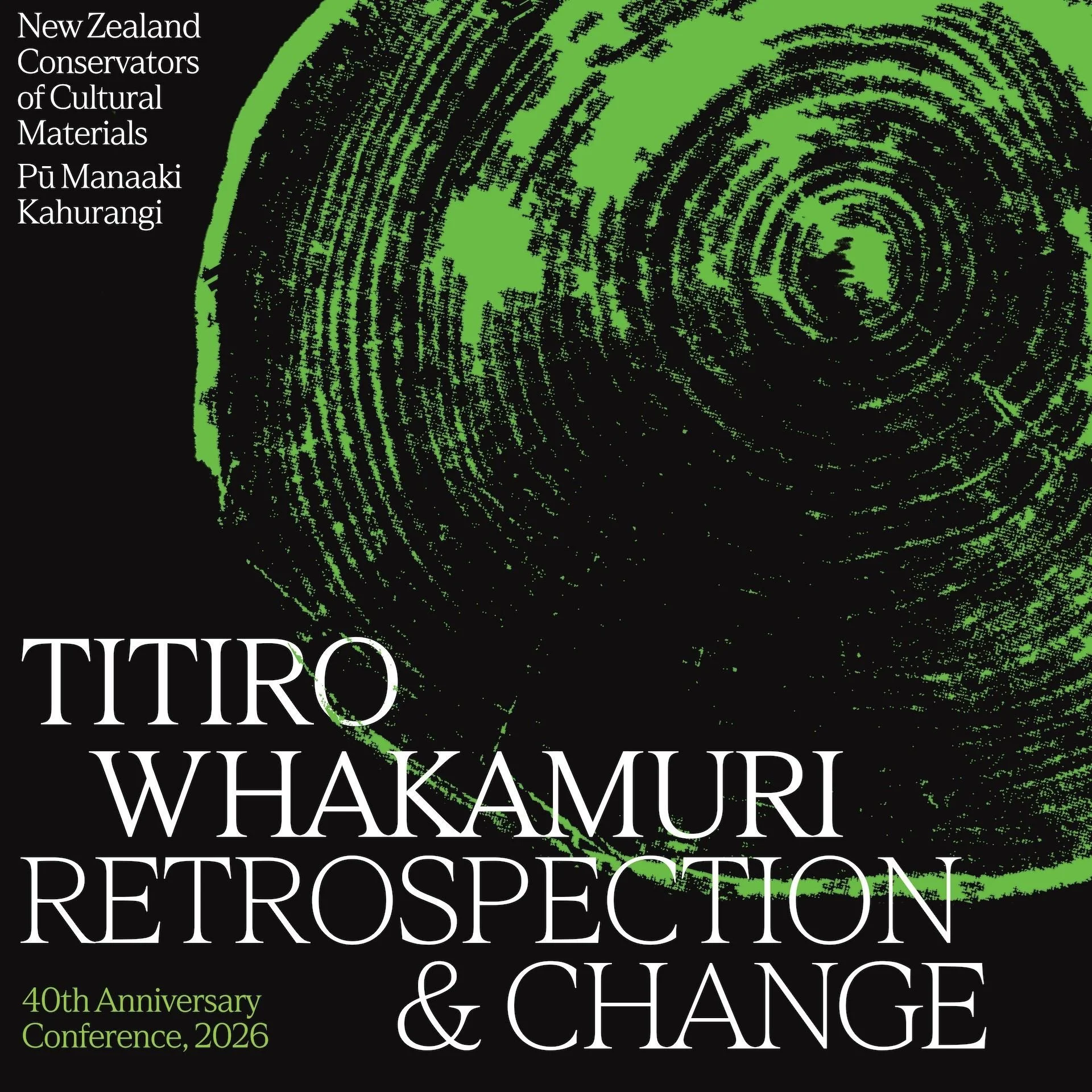
Have a look at the speaker’s programme here: NZCCM Speakers Programme 2026
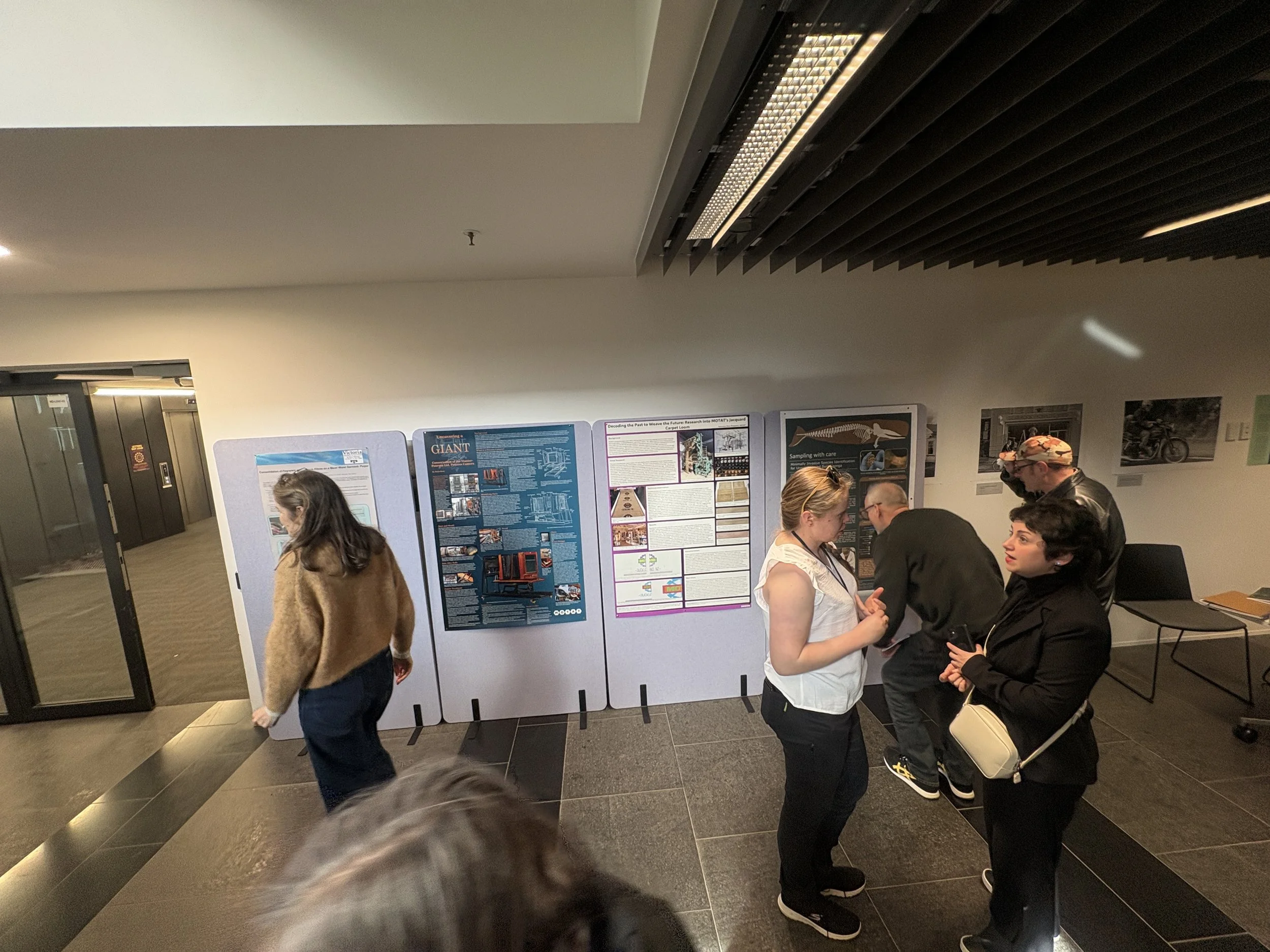
For our Heritage Preservation team, Day One was particularly thought-provoking. Again and again, speakers returned to ideas that shape our own practice: that conservation is about far more than treatment; that professional judgement matters; that knowledge needs to be shared; and, perhaps most importantly, that the care of cultural heritage is fundamentally about people and relationships.
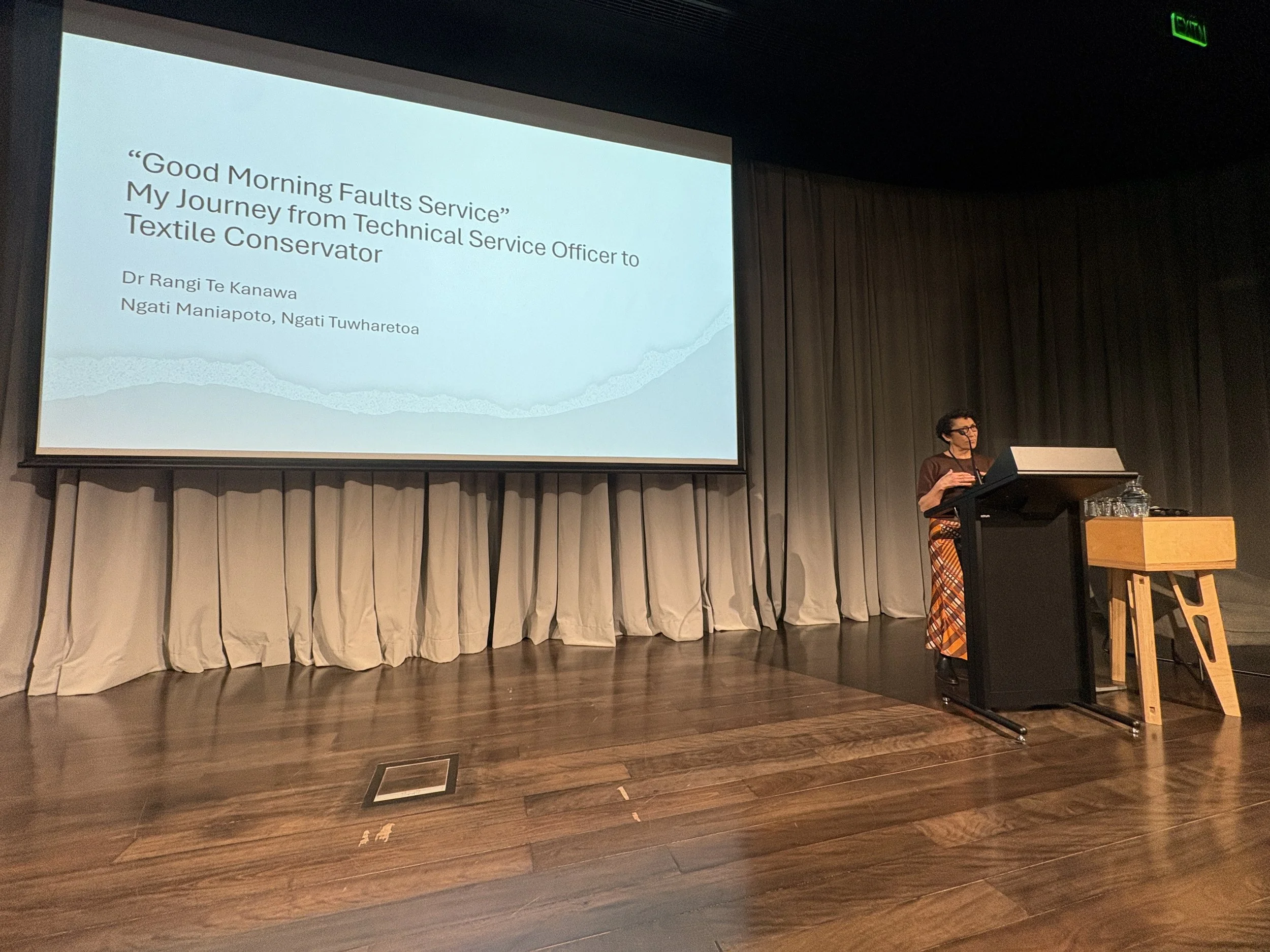
The programme deliberately began by looking backwards. Dr Rangituatahi Te Kanawa opened the conference presentations with the keynote Good morning Faults Service – from Technical Service Officer to Textile Conservator, before the first session turned to some of the people who helped establish professional conservation practice in Aotearoa.
From treatment to a profession
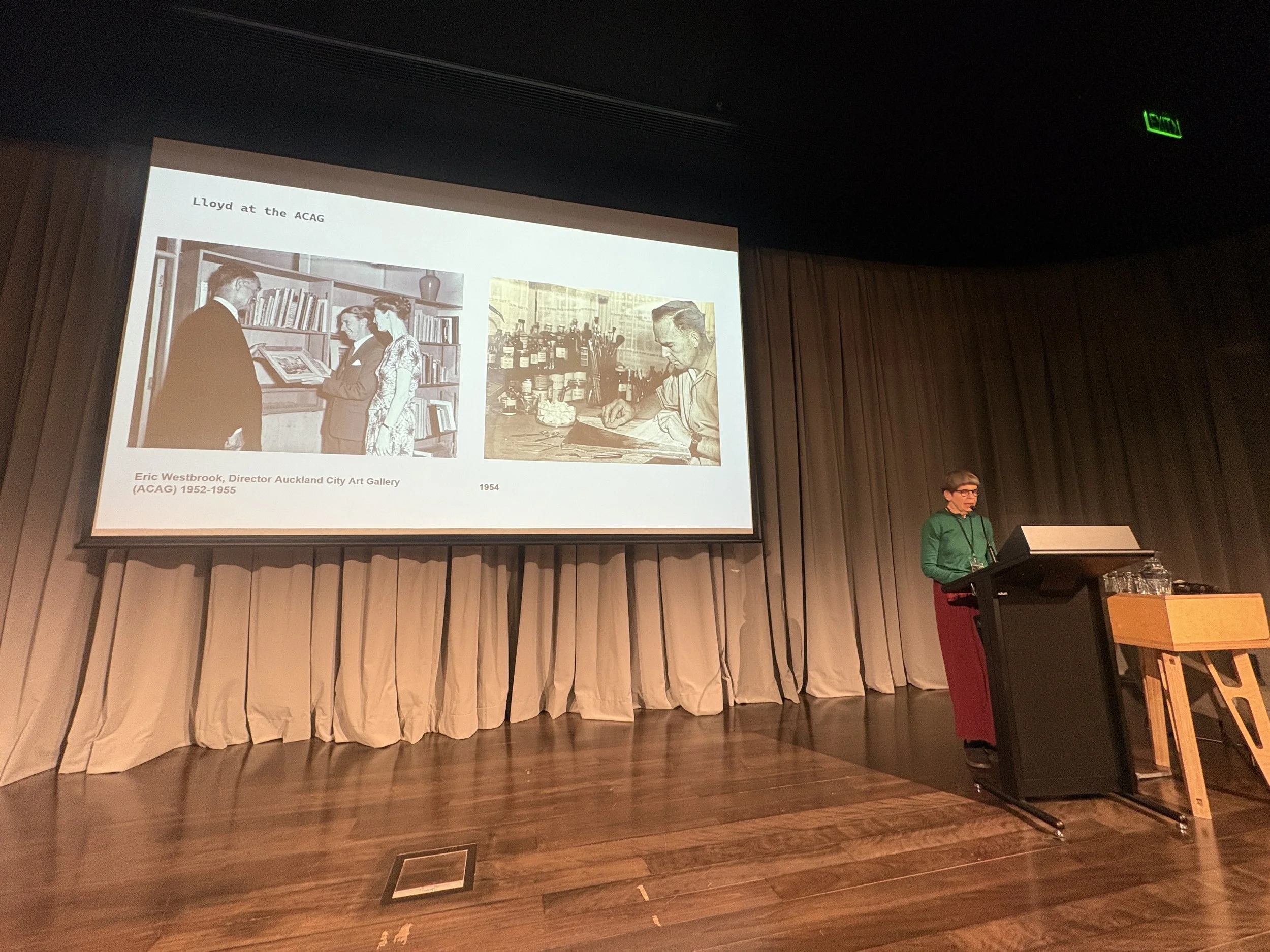
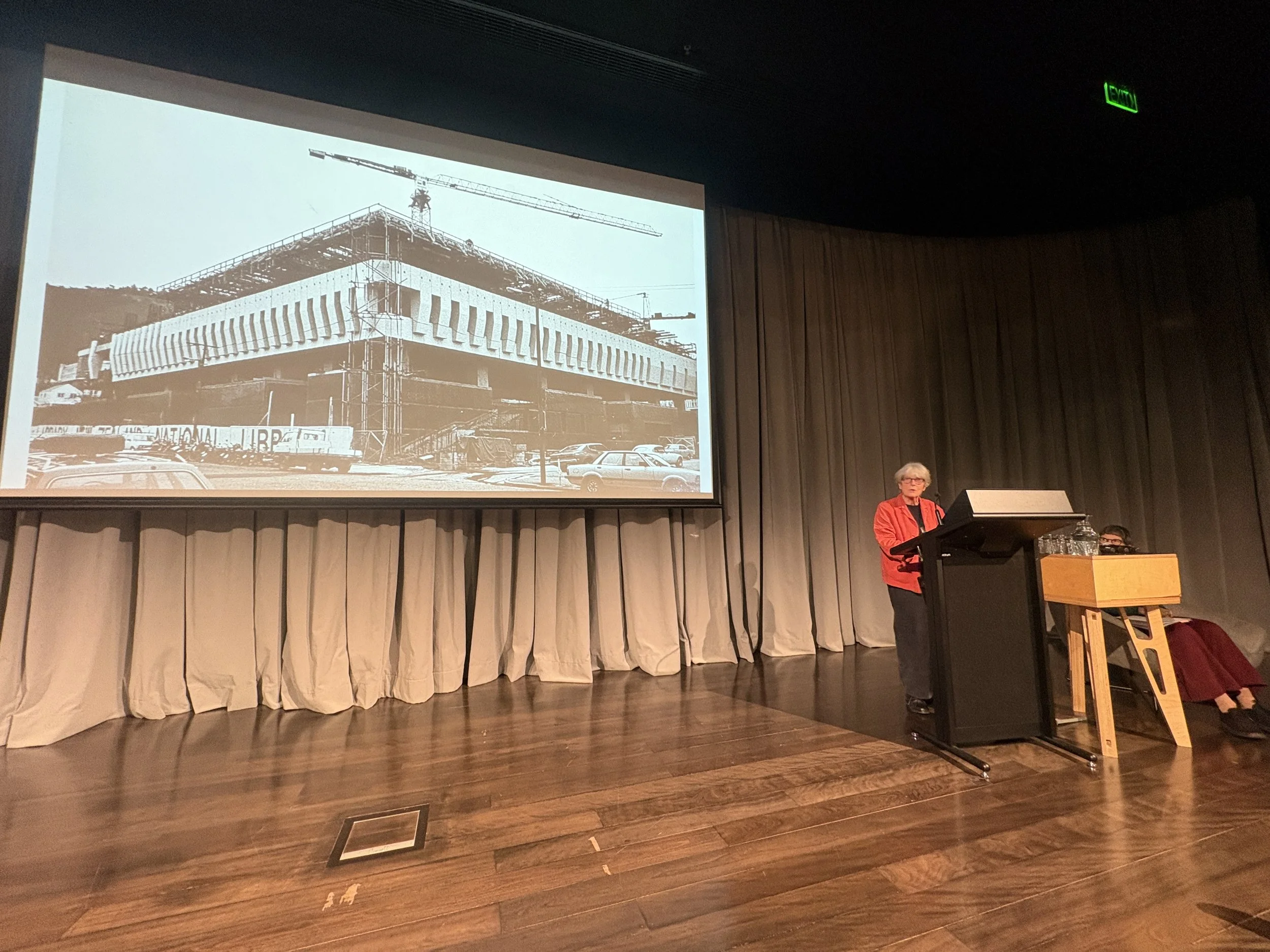
Sarah Hillary’s and Lyndsey Knowles’ presentations explored the early history of conservation at Auckland City Art Gallery and the influence of Les Lloyd, Jeavons Baillie and Kate Woodgate-Jones.
The stories were a reminder of just how much conservation practice has changed.
Early professional conservation was strongly treatment-focused. Objects were repaired, cleaned and restored, while many of the preventive approaches now embedded in collection care had yet to become standard practice. Some techniques once considered appropriate would later be reconsidered as knowledge and expectations changed.
But those early practitioners also helped make conservation visible.
The Florence flood of 1966 became one of the events that transformed conservation internationally, accelerating conversations about training, standards, disaster response and preventive care. In Aotearoa, figures such as Jeavons Baillie and Kate Woodgate-Jones helped push those conversations forward, advocating for professional standards, better collection care, conservation supplies and training.
It was a useful reminder that professions are not created fully formed. They develop because people question existing practice, share knowledge and sometimes challenge the status quo.
That remains true today.
The people who built the networks
David Butts’ Mina McKenzie: A Guiding Hand shifted the focus to another influential figure in Aotearoa’s museum history.
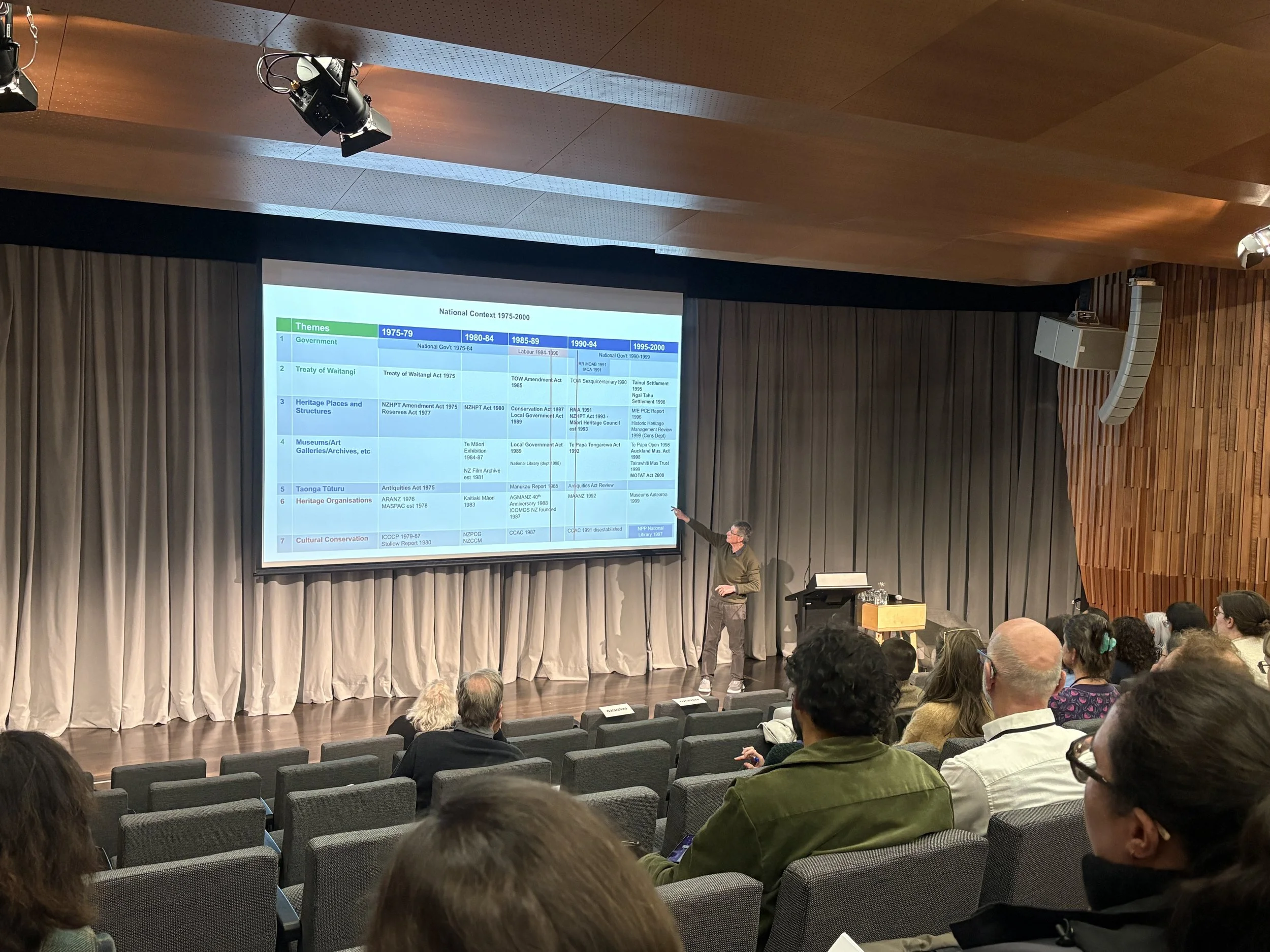
It was an emotional and personal reflection on Mina McKenzie, but it also placed her work within the much larger changes occurring across museums and government during the 1980s and 1990s.
One idea particularly stayed with us: museums are not simply buildings containing objects. Their purpose comes through their relationships with the communities they serve.
That feels remarkably contemporary, yet these conversations have long histories.
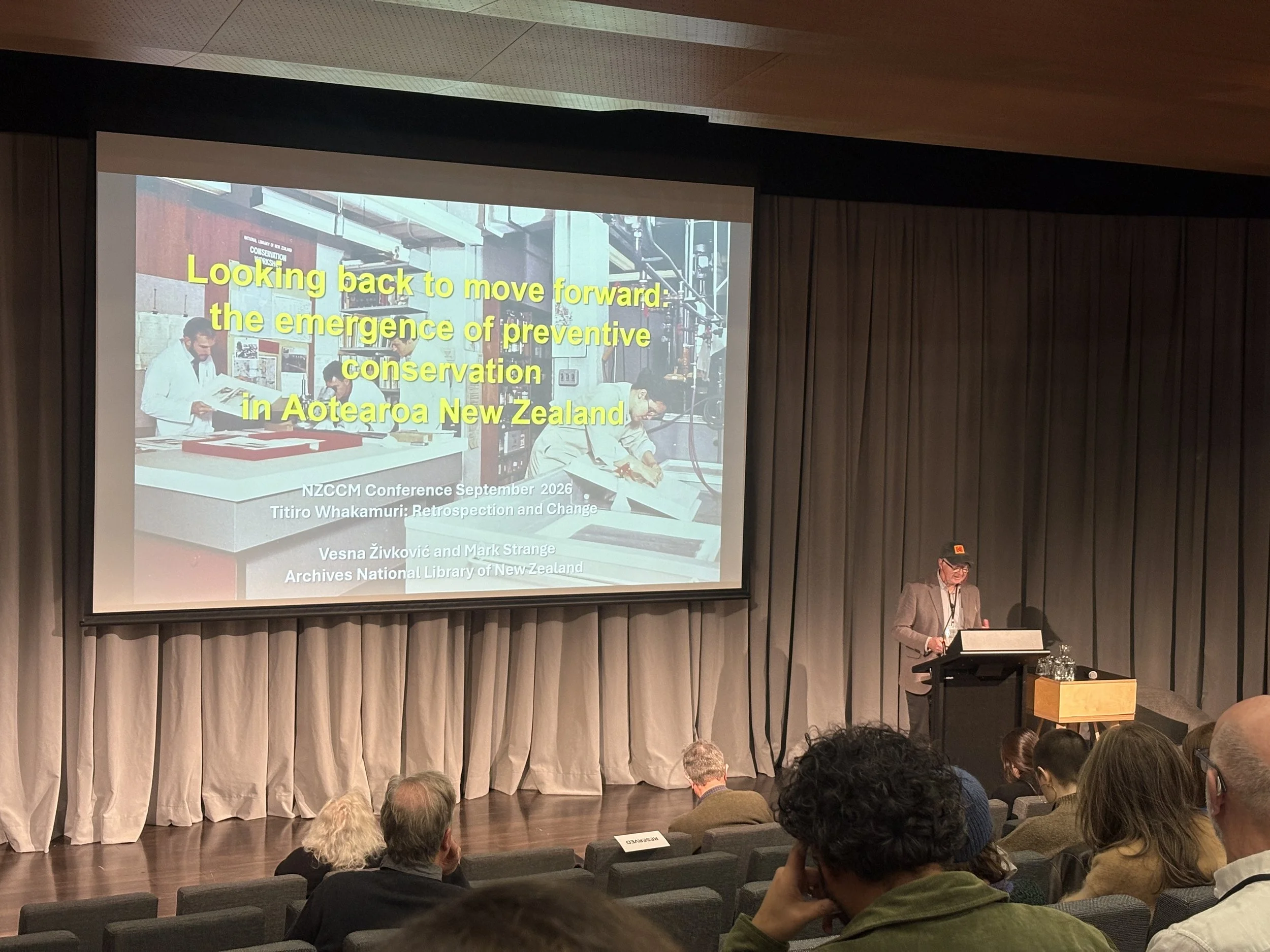
The same was apparent in Mark Strange and Vesna Živković’s exploration of the history of preventive conservation in Aotearoa. Their story showed preventive conservation developing not simply as a set of environmental standards, but through networks of practitioners, training, regional services and increasingly community-based approaches.
The Te Māori exhibition was identified as an important moment in changing thinking around taonga and conservation. Increasingly, care could not be understood solely through the physical condition of an object. Questions of cultural authority, access, relationships and living significance also mattered.
Aotearoa began asking different questions.
And those questions contributed to wider international conversations about conservation.
Disasters, preparedness and people
Lynn Campbell’s presentation on NZCCM and the Canterbury Disaster Team brought another dimension to this history.
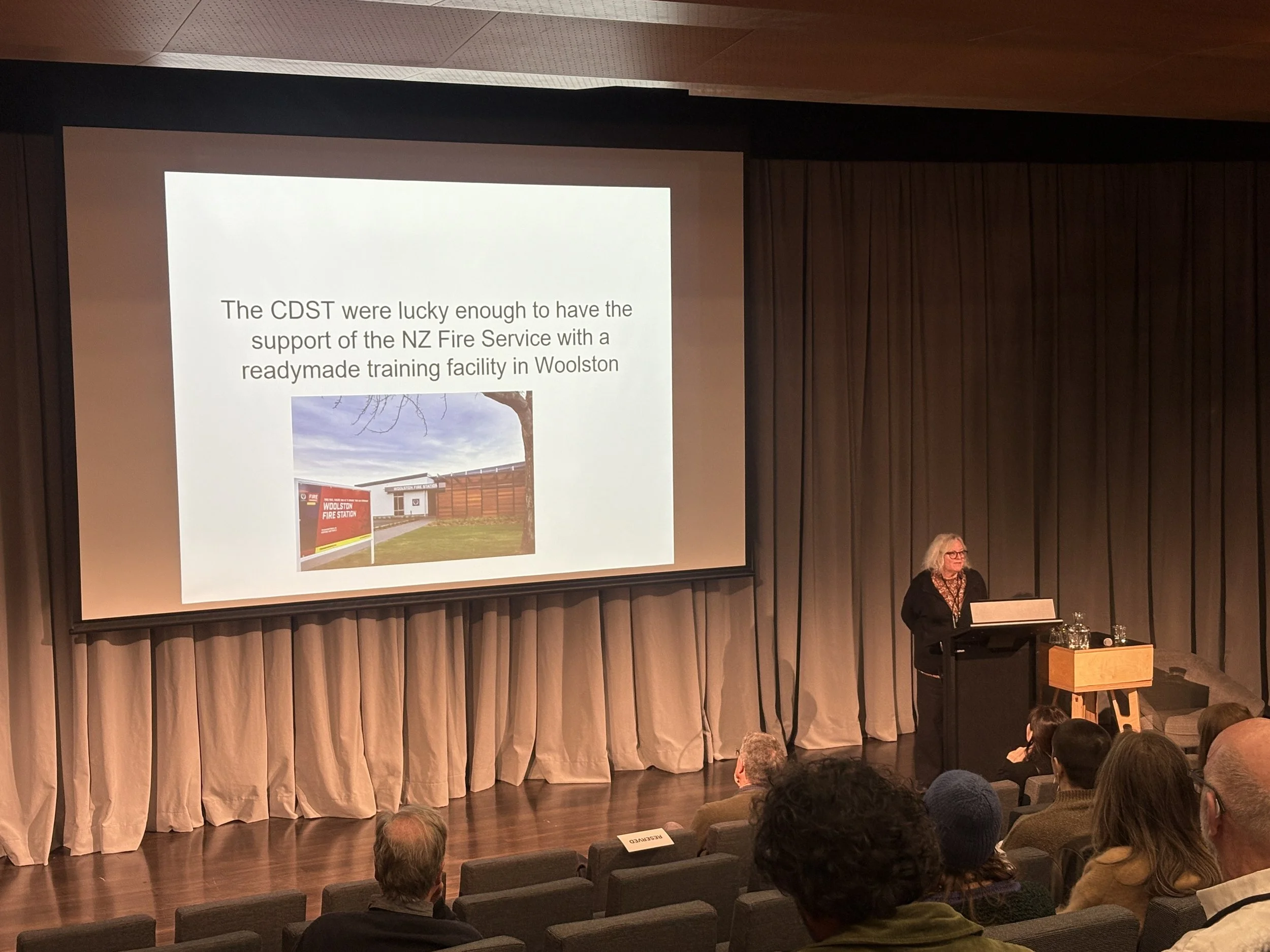
The team, founded in 1987, emerged from a network of people willing to share their expertise and help heritage organisations prepare for, and respond to, emergencies.
The nature of that work has changed substantially. Large disaster responses cannot simply depend upon groups of willing volunteers. Increasingly, the emphasis is on preparation, training, advice and ensuring heritage considerations are represented within wider emergency-management structures.
But one lesson has remained remarkably consistent:
Local relationships matter.
A beautifully written emergency plan has limited value if nobody knows it exists, nobody has practised it and nobody knows who to call.
Conservation may involve materials, chemistry and environmental science, but resilience is also built through relationships.
What happens when knowledge disappears?
The afternoon brought the conversation from professional history into everyday practice.
Tracey Wedge’s wonderfully titled OMG! Did I Do That? considered conservation documentation and the consequences when information becomes separated from an object.
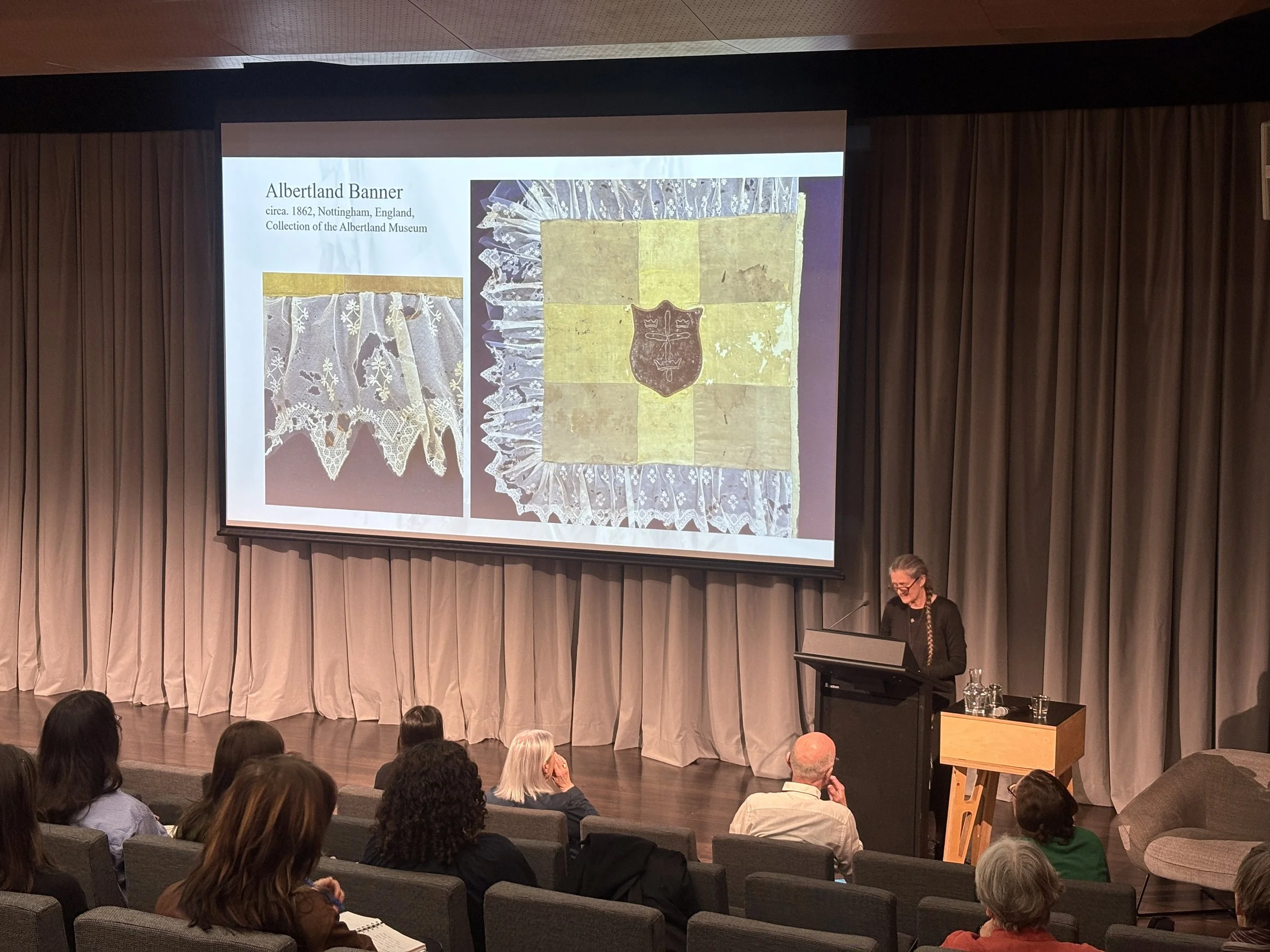
The problem can sound mundane: a missing report, a record buried several clicks deep in a database, or treatment knowledge held by a staff member who has since left.
But the consequences can last for years.
Documentation is part of conservation. Knowing what was done, what materials were used, why a decision was made and what was observed at the time allows future practitioners to understand an object rather than starting again.
David Ashman’s Care, Craft, and Change: A Journey Through Book Conservation similarly reflected on changing practice. From the symbolism of gloves to disaster plans that once lived as manuals on shelves, conservation has continually reassessed what good care actually looks like.
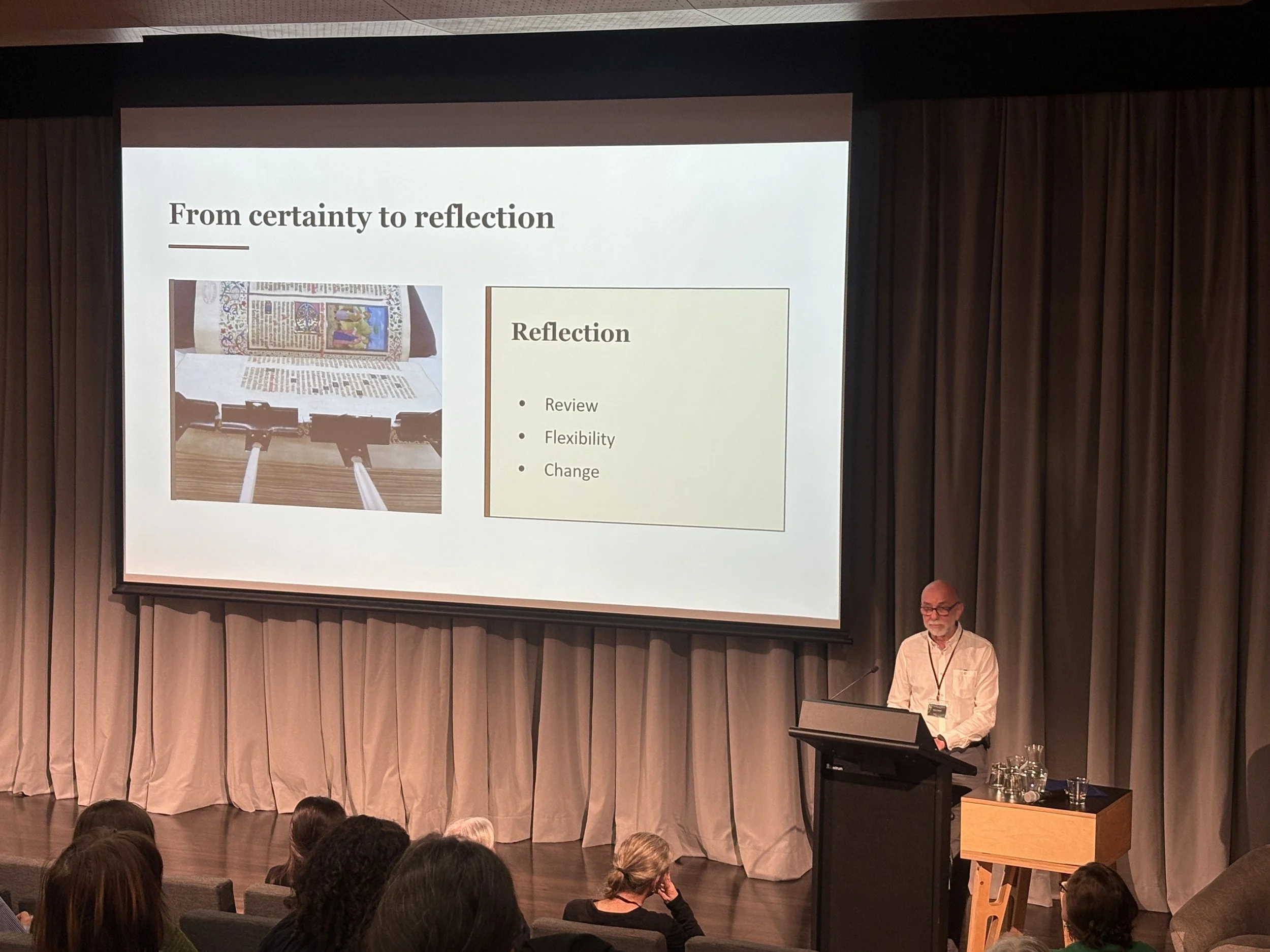
One of the strongest messages from this part of the day was that conservation cannot be reduced to a set of technical instructions.
Knowledge matters.
Experience matters.
But judgement matters too.
Taking conservation outside the conservation lab
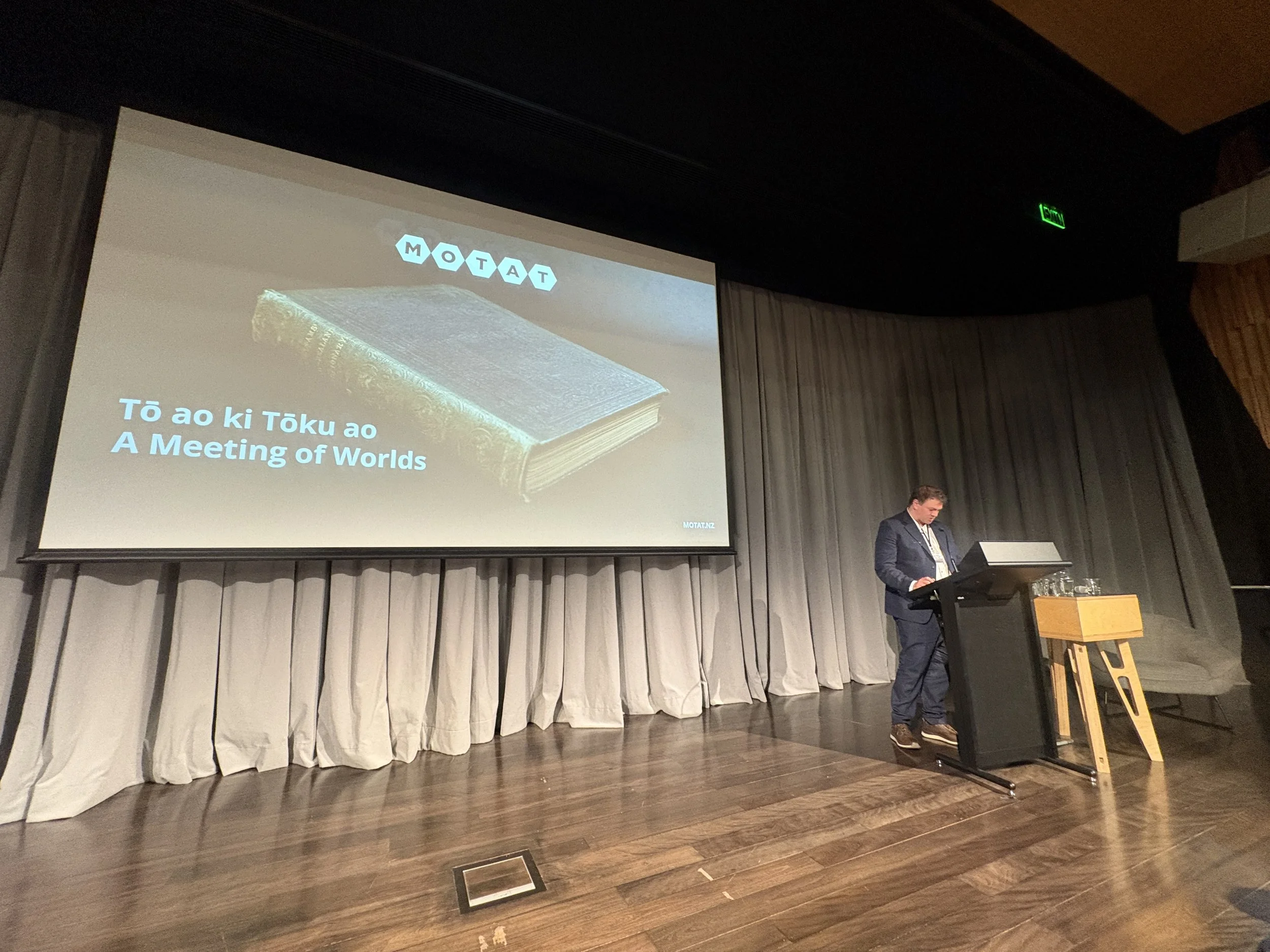
Ben Knox’s A Meeting of Worlds and Anika Klee’s Presenting Preventive moved the conversation towards collaboration and communication.
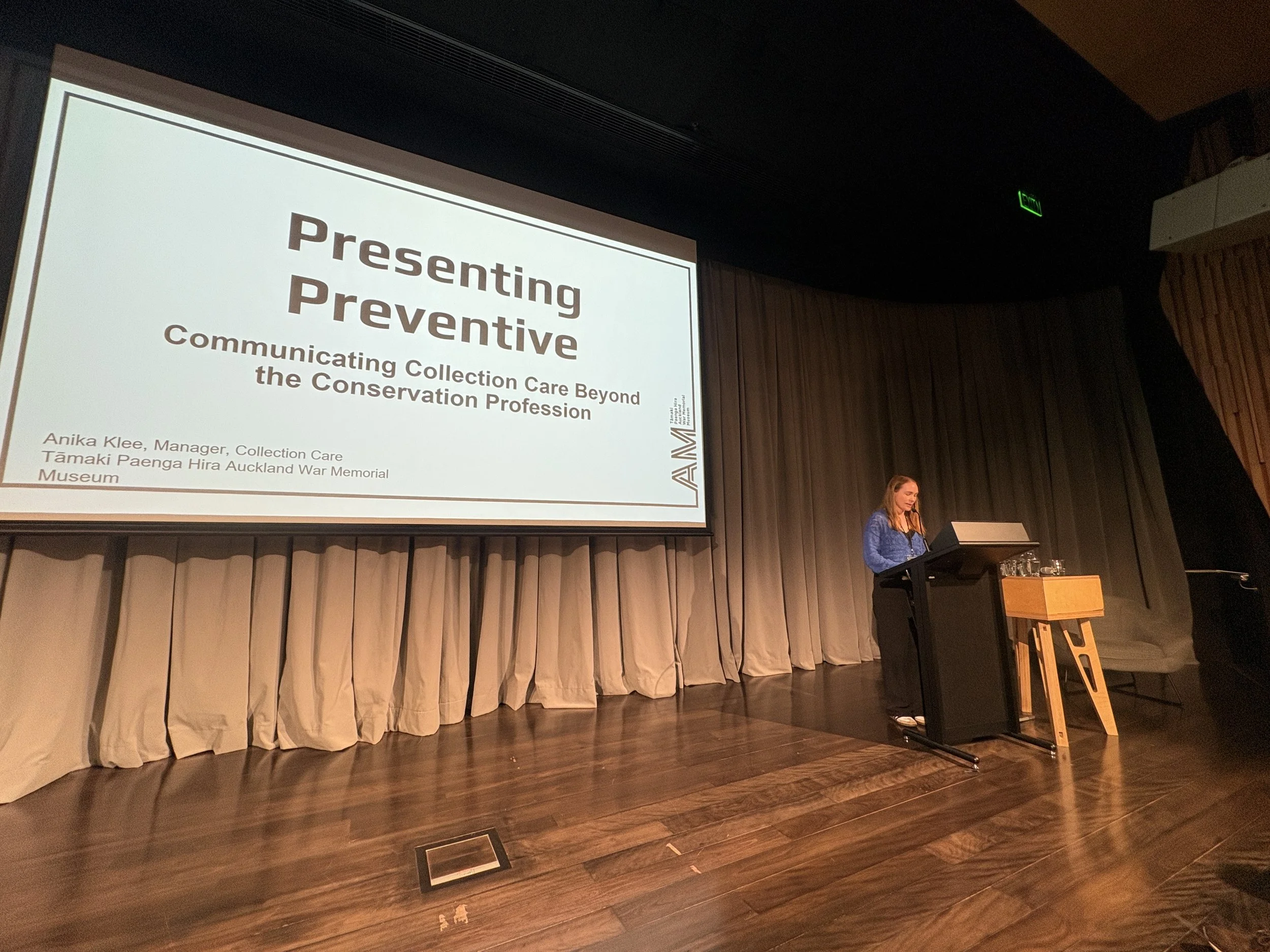
Anika raised a challenge familiar to many conservators: how do we communicate specialist knowledge to people who do not speak the language of conservation?
Rules that seem obvious inside a conservation department, no flowers, closed windows, restrictions around food or what can enter a gallery, can appear arbitrary without an explanation of the risks behind them.
Her response was to make collections care understandable and useful across an organisation.
That means thinking carefully about induction, training, videos and other forms of communication. It also means recognising that risk does not conveniently follow organisational charts. Everyone from curators to contractors can affect the preservation of a collection.
There was another important expansion here too. Collections are not cared for only inside museums. Cultural materials live in homes, kitchens, community spaces and marae.
Good preventive conservation therefore needs to work in the environments where people actually care for their heritage.
When professional judgement becomes the work
Andor Vince’s The Changing Context of Decision-Making in Collections Care provided one of the clearest threads connecting the day's discussions.
Conservation decisions were never purely technical, but the context surrounding them has become increasingly visible and complex.
We may have several technically reasonable options. We also have limited resources, expectations around access, different stakeholders, significance to communities and organisational priorities.
So which option do we choose?
There may not be a single objectively “correct” answer.
Two experienced professionals can look at the same evidence and reasonably reach different conclusions. The important work is therefore making our assumptions visible, understanding uncertainty, explaining our reasoning and being clear about where the conservator’s role begins and ends.
That resonated strongly with us.
When change itself becomes care
Heritage Preservation's Rosie Ralph, Renee Ross-Cranson, Trent Hohaia, Anne-Marie Medina and Dr Susanne Rawson also contributed to the final session with When Change is Care: Function, Access and Conservation Decision-Making. The presentation explored a tension at the centre of conservation: a profession traditionally concerned with limiting change sometimes encounters situations where thoughtful change is necessary to sustain function, access or cultural significance.
The NZCCM Code of Ethics places strong emphasis on preserving the nature and materials of an object and establishing the necessity of intervention. But real objects exist within real communities and changing contexts. Sometimes the most responsible decision cannot be reached through material condition alone.
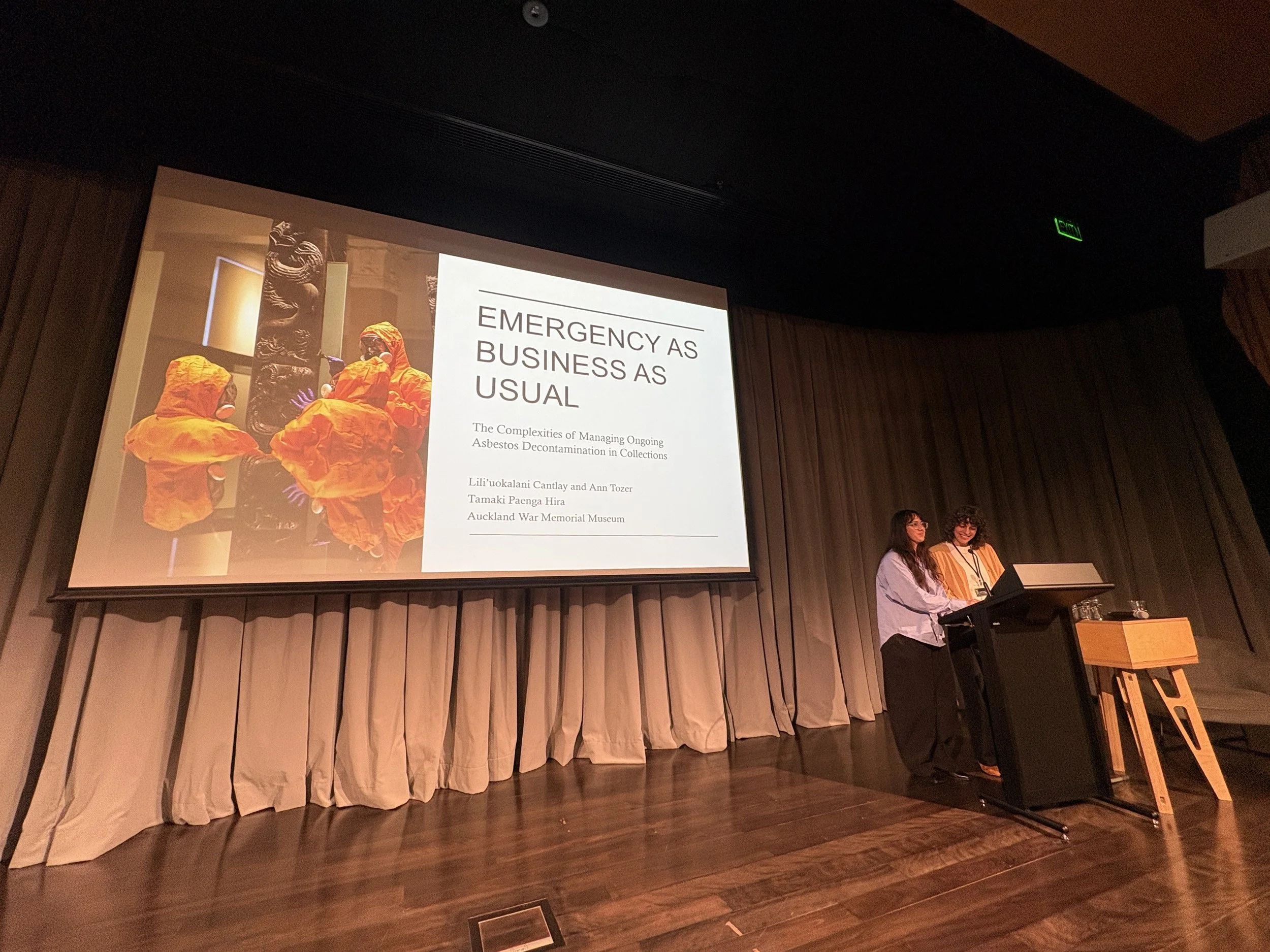
The day ended with a very practical example of managing change and risk, as the Auckland War Memorial Museum ‘asbesties’ discussed the complexities of ongoing asbestos decontamination in collections, a process involving containment, carefully separated working areas, PPE, testing, cleaning and considerable planning.
Forty years on
Looking across Day One, perhaps the biggest change in conservation is not a particular material, treatment or piece of equipment.
It is the widening of the conversation.
The profession has moved from an emphasis on what we do to objects towards deeper consideration of how we make decisions with and for the people connected to them.
Technical knowledge remains essential. So do documentation, training, preventive care and professional standards.
But conservation also requires us to listen, explain, question our assumptions and acknowledge that objects can carry meanings that cannot be measured with an instrument.
Forty years of NZCCM gives us plenty to look back on.
The more interesting question is what we choose to carry forward.